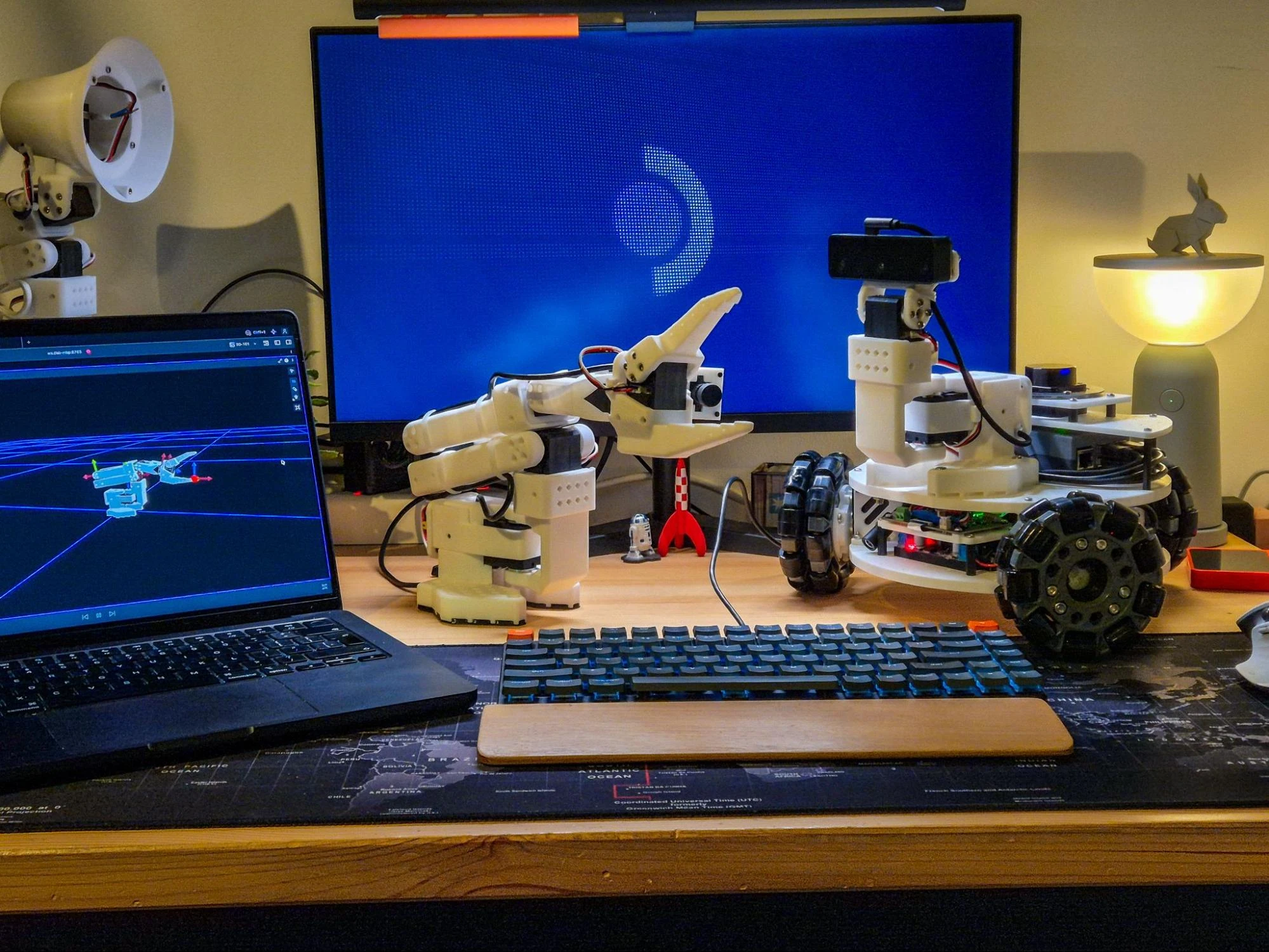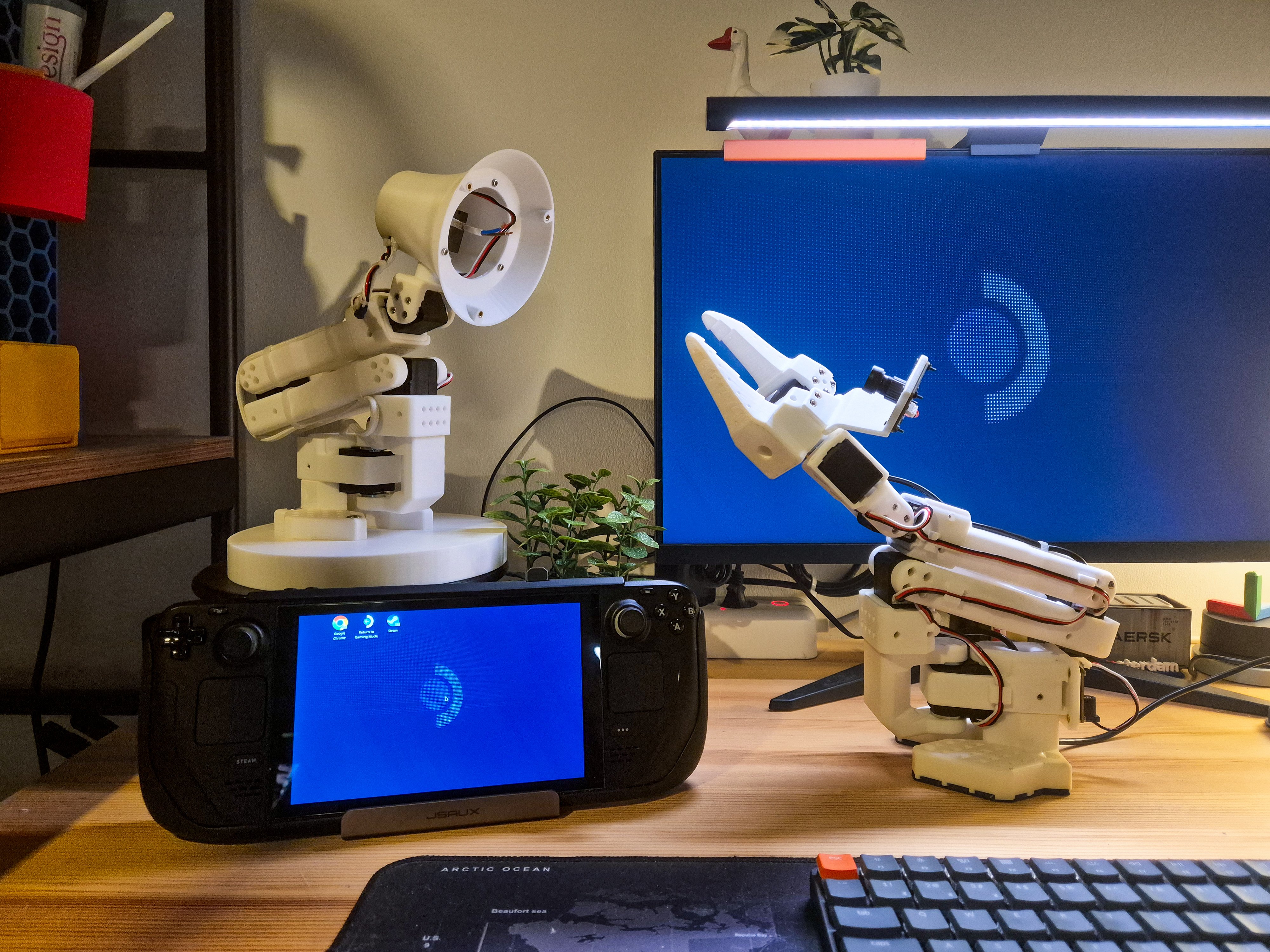

OHS 2026 - Berlin 🇩🇪
My first Open Hardware Summit, and a birthday I won't forget

I first heard about the Open Hardware Summit at ROSCon last year and was immediately intrigued. When I discovered it fell on the same weekend as my birthday, attending became a no-brainer. My original plan was modest: spend the first day listening to talks, visiting exhibits, and networking; use the birthday to explore Berlin, catch up with friends, and have a birthday dinner before flying home. I seriously underestimated how much fun the summit would be, and ended up staying far longer than I'd planned. Here are some highlights from the event.
Talks
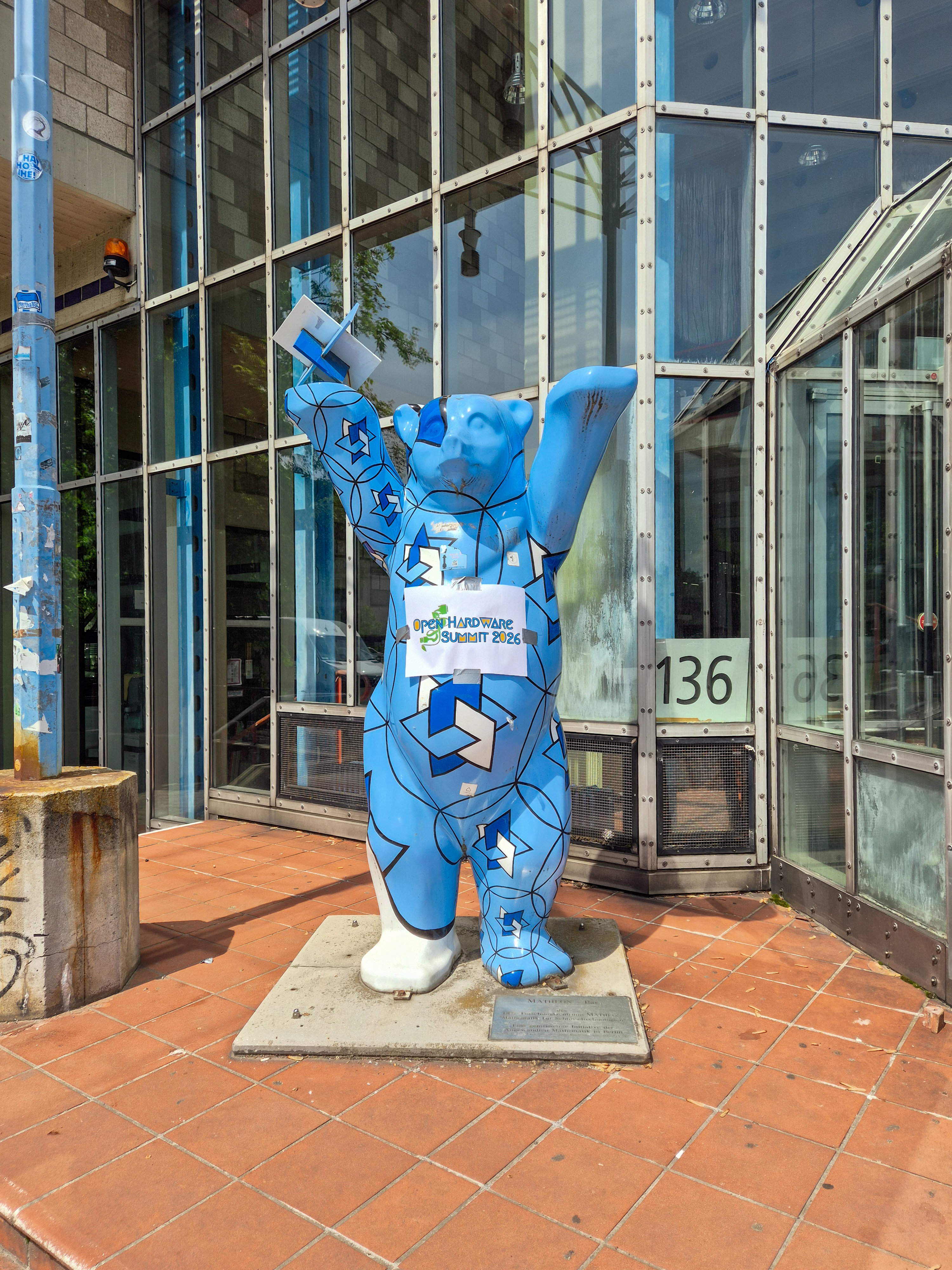
I flew from Amsterdam to Berlin on the morning of May 23rd and reached the summit venue - the TU Berlin mathematics building - by 10:30 AM.
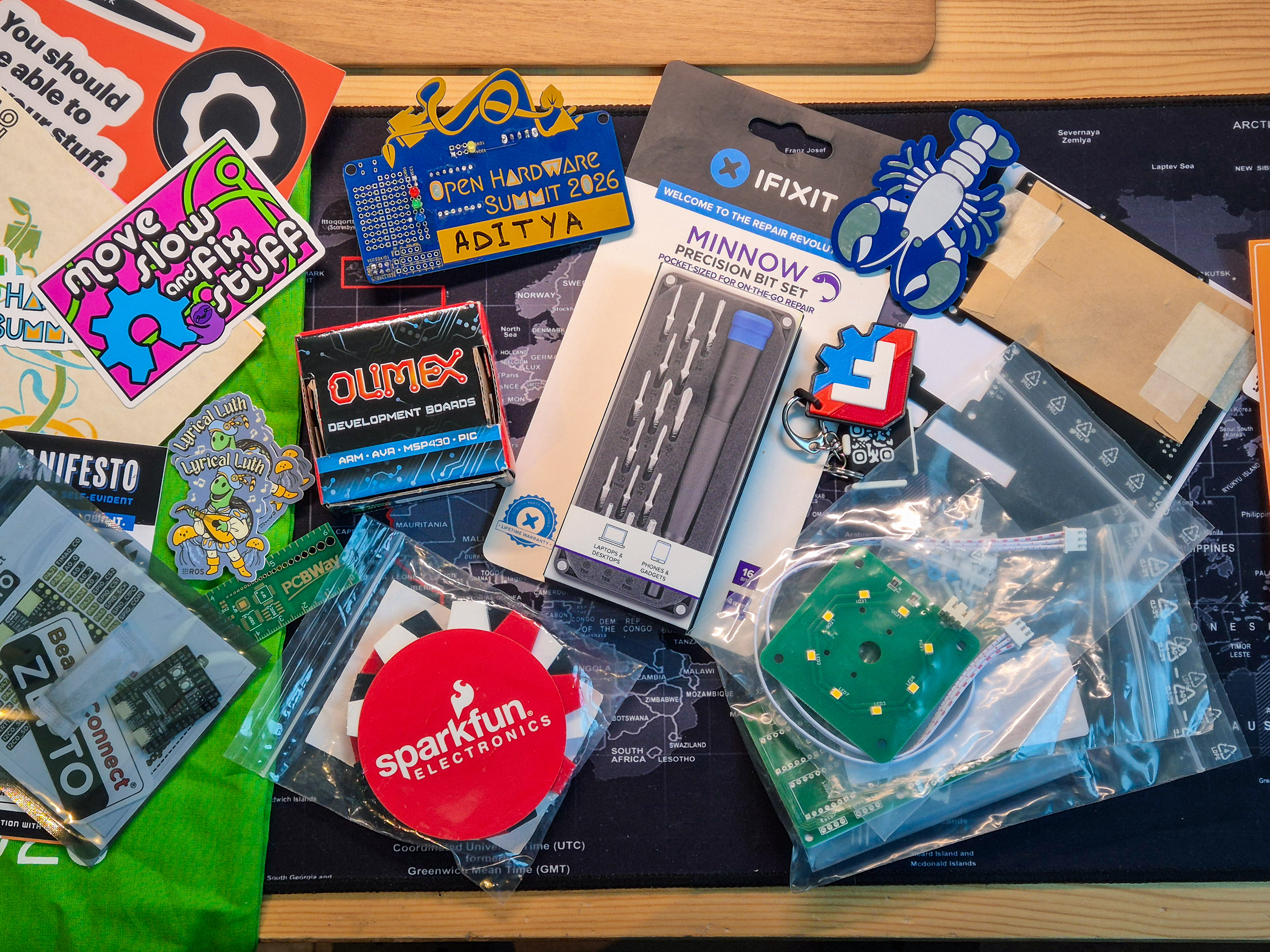
At registration, I picked up my badge and goodie bag. I'd seen Kat Scott's LinkedIn post beforehand and had some idea what to expect, but I was still pleasantly surprised. Coming from developer conferences and trade shows, I'm used to branded notebooks, pens, and stickers. Here, the goodie bag included microcontrollers, a DIY air quality monitor kit, an iFixit precision screwdriver set, a Tony's Chocolonely bar (best chocolate in the world, btw), a calendar, a book, and a tote bag. Actual useful stuff. The badge wasn't paper either - it was a PCB (designed by bleeptrack), bundled with some parts: a coin cell battery, battery holder, headers, LEDs, and wires.
I couldn't check into my hotel yet and was already tired of lugging my backpack around, so I dropped into the auditorium to rest, listen to some talks, and plan my next move. I ended up sitting through quite a few across the day, with breaks to visit the exhibition area and talk to people. The full schedule is on the OHS26 website, and all recordings are on the OSHWA YouTube channel. Here are the talks that stood out to me:
Wearable Projectors for the Opera
This talk was already in progress when I entered the auditorium, so I only caught the second half. The presenters built wearable projectors for an opera performance at The Met Cloisters - a museum where cable runs weren't possible. It is always fun to see open hardware show up in the arts. They mentioned having the projectors with them at the event, and I wish I'd tracked them down - I'd have loved to see them working in person.
https://www.youtube.com/watch?v=m8o45XHPeHk
Building a DIY Scanning Tunneling Microscope
Given my background in high-precision mechatronics, this one caught my attention. Precision microscopes require both coarse and fine positioning stages, typically through two separate actuators. Sam Harley found a way to combine both into a single actuator - genuinely impressive engineering - and then open-sourced the whole thing. Definitely on my list of topics to dig into when I get the chance.
https://www.youtube.com/watch?v=Xmqj9LZ6IAg
AirGradient's Open Source Hardware Advantage
Achim Haug, founder and CEO of AirGradient, talked about building an open-hardware company that has shipped 50,000 air quality monitors to 80+ countries, and what open-source actually makes possible along the way - community integrations, open schematics, reduced lock-in. He also touched on AI-assisted development, including vibe-coding Tetris onto their product's display. A lot of this was directly relevant to where I'm thinking about taking Kamath Robotics, more on that later. As a sponsor, AirGradient also included a partial DIY kit of their indoor air quality monitor in the goodie bag, and I'm looking forward to putting it together.
https://www.youtube.com/watch?v=DNvcKuE2FbE
A Practical Guide to EU Regulations and Directives
I kept spotting Clemens Mayer around the event, thinking he looked familiar, and eventually placed him as a host on Element14Presents, a YouTube channel I frequently watch. His talk is essential viewing for anyone building and selling hardware in Europe. Key takeaways:
CE compliance for open-source hardware? It depends on the product
General Product Safety Regulation (GPSR) applies to almost everything
EU Directives are adopted into national law; EU Regulations are directly applicable EU-wide
Watch the full talk for the complete list of directives and regulations worth knowing about.
https://www.youtube.com/watch?v=kk2fLntkyAU
The State of Open Hardware
Mitch Altman presented an honest look at the slow erosion of openness among the big names in the space. Arduino's acquisition by Qualcomm effectively ended its open-source stance. I knew Prusa had been drifting away from open-source, but wasn't aware of the specific licensing changes until this talk - changes that technically mean they're no longer open-source despite still using the label. Mitch also touched upon what happens when you bring AI into the mix. Worth watching if you care about where the ecosystem is heading.
https://www.youtube.com/watch?v=ZeEtrrLqNSM
Exhibits
The exhibition area, was distributed into four rooms, with some really creative projects being showcased. They also had empty tables where people could bring and share their projects. Falko Richter made a really nice overview video of the exhibition area.
https://www.youtube.com/watch?v=9H0Zhv0ZLKw
While there were many cool projects, here are some that caught my eye.
OpenScan
OpenScan is an open‑source 3D scanner that uses two NEMA stepper motors and a Raspberry Pi camera, with the firmware running on a Raspberry Pi and the chassis made from 3D‑printed parts. They even brought a giant Benchy printed from a 3D scan to demonstrate its scanning performance; you can see it (and the scanner itself) in Falko’s video above; unfortunately, I forgot to take pictures.
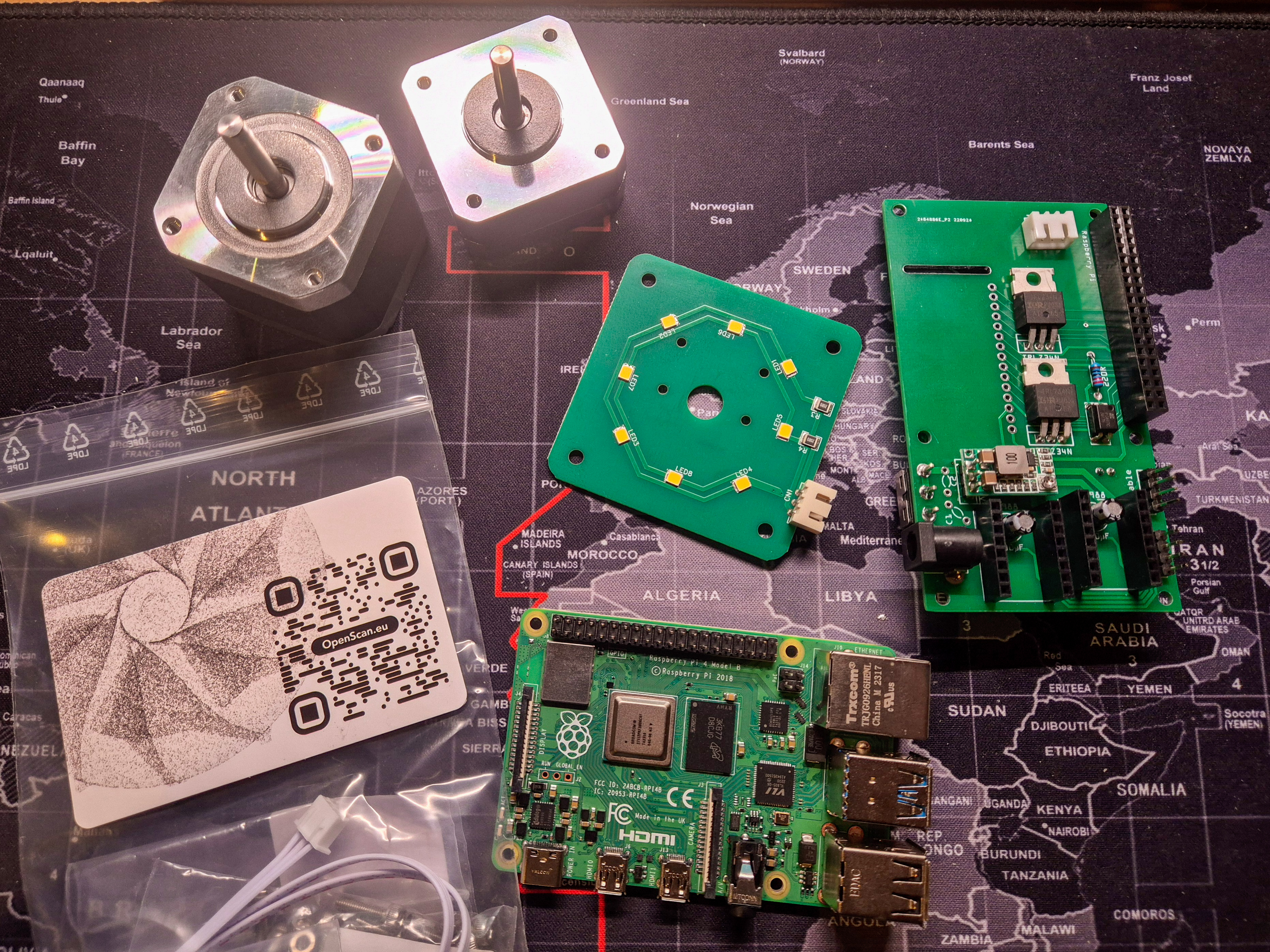
They were kind enough to give me a PCB kit to build my own, and I'm eagerly waiting for a free weekend to put it together. I’ve already soldered the PCB kit and started 3D‑printing the necessary parts.
Open Vacuum
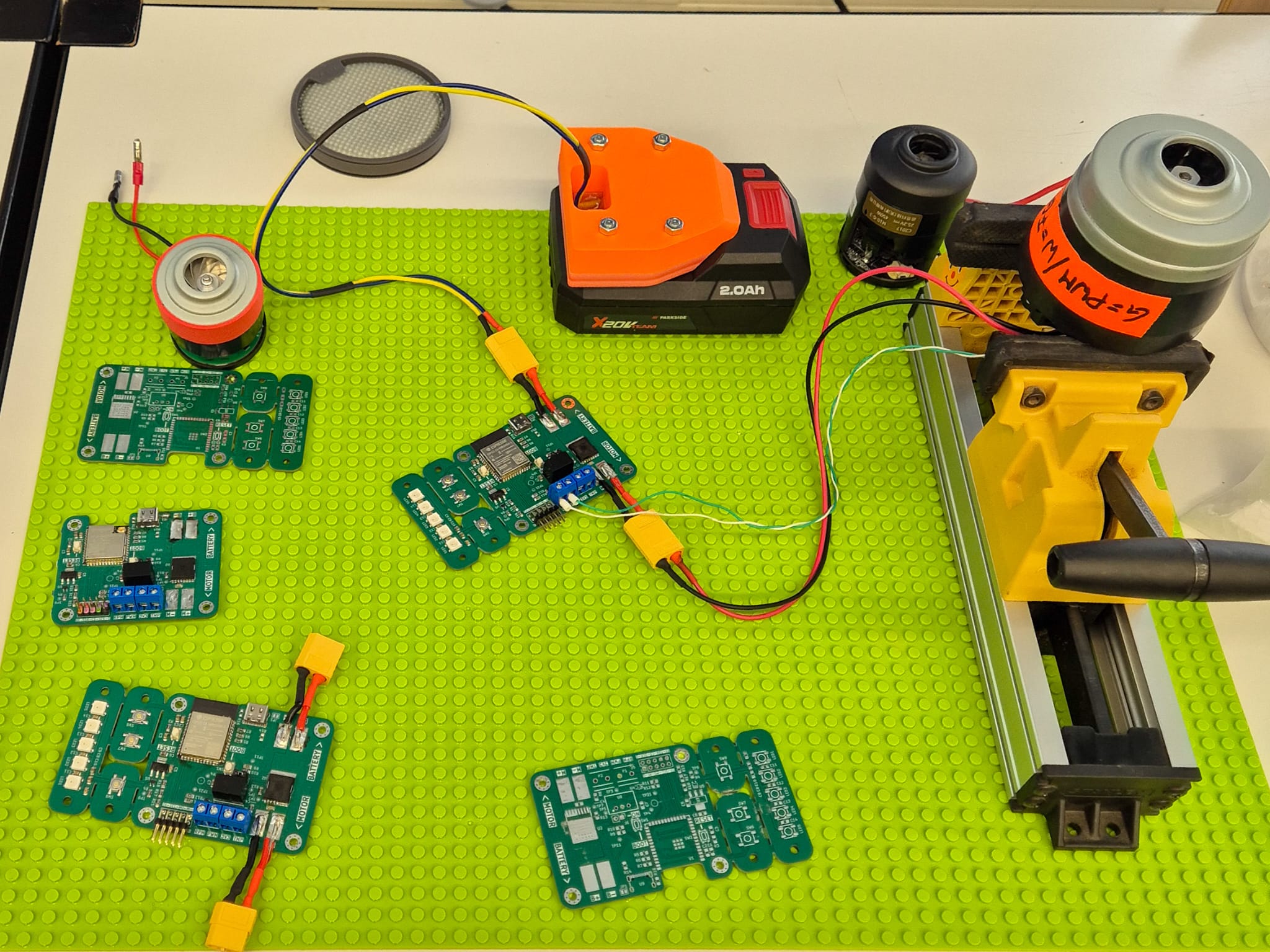
A company (or group?) called Caznic showcased their open hardware vacuum cleaner built using existing vacuum cleaner components, a custom control board, and 3D printed parts.
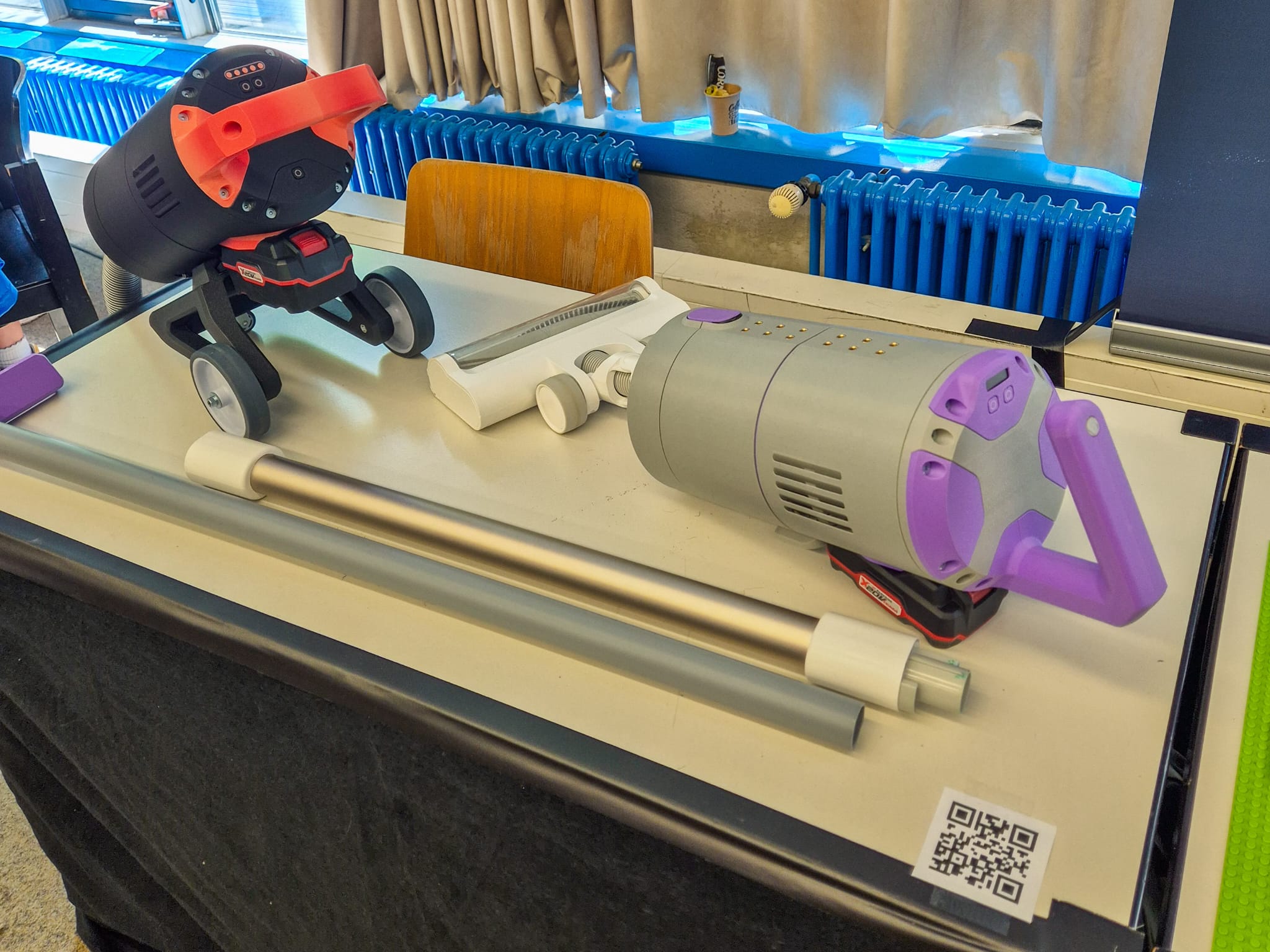
For me, there were two standout design choices: first, the control PCB can be physically snapped into pieces and reconnected with wires for flexible mounting, and second, it runs on a power tool battery. We had a good chat about making it autonomous on a robot - something I might try. They also presented a talk at the summit.
Open Spider
This creator showcased a bunch of legged robots, and it was a lot of fun watching them run about. The tiny ones used small servo motors, a XIAO ESP32 S3 Sense board, and a battery. The mechanical parts were made from a single PCB that you could simply snap apart. I really liked the one with the furry cover, but it was being charged, so I couldn't see it walking around. There was also a larger one on display, as you can see below.
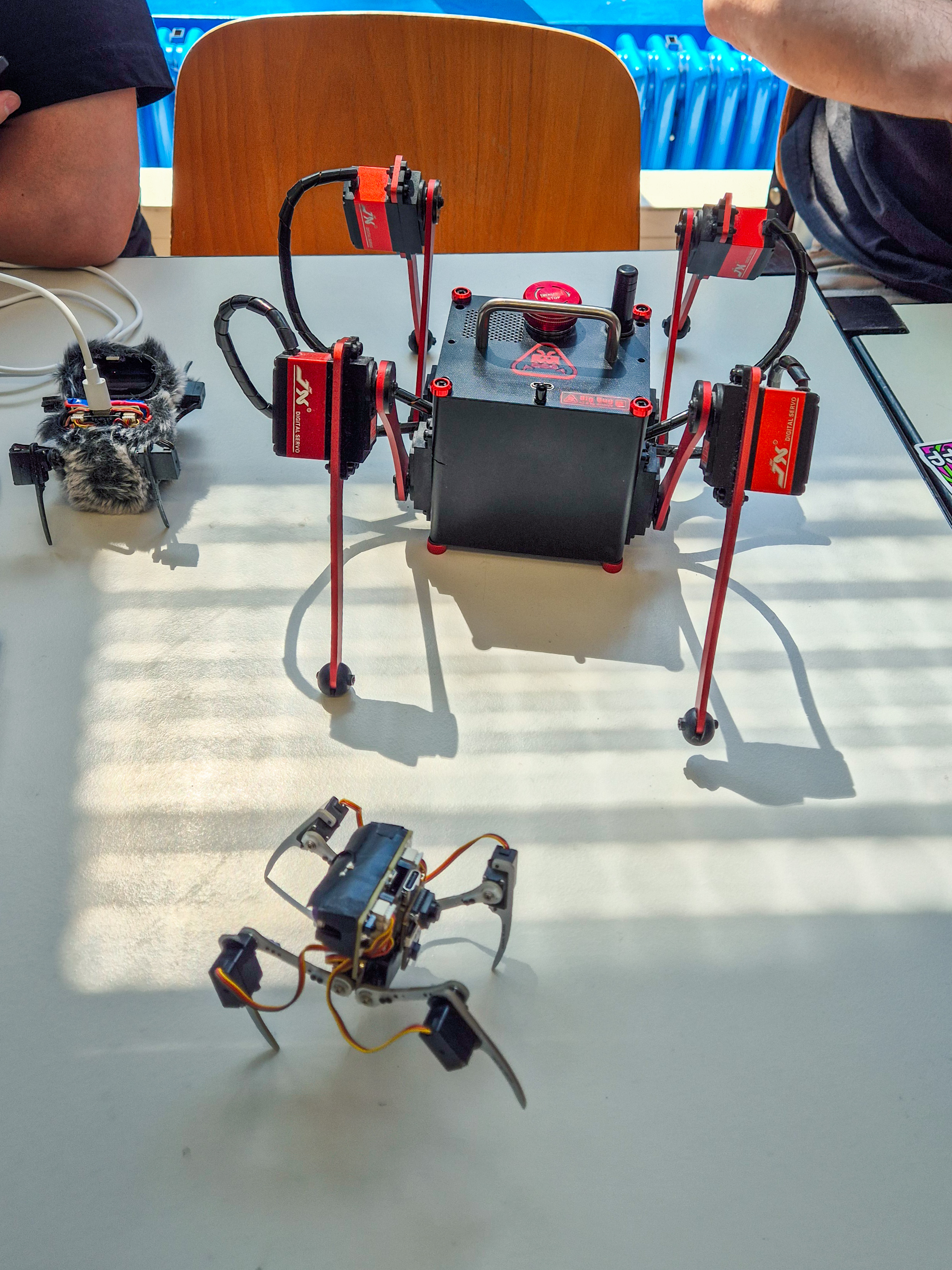
I totally forgot to get this creator's name or the name of this project, so I don't have links to it. If you are reading this and know more about this project, do let me know.
Open Hardware Boat
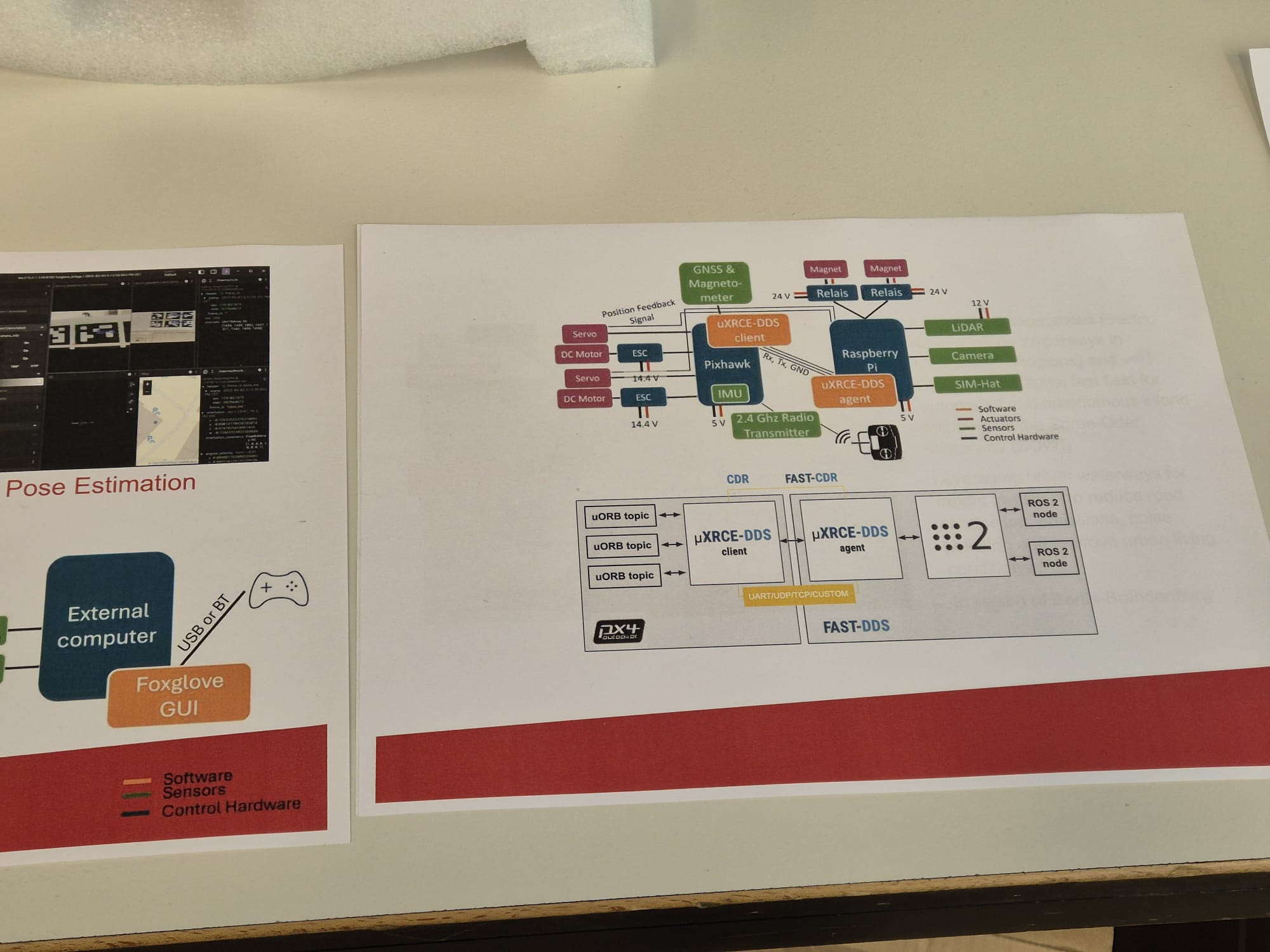
Another project I do not know much about is this boat with brushless motors for motion, a 5G/LTE HAT (I think) for communications, GPS, and a Unitree 4D LiDAR. It also had magnets on the side, which I think are for docking.
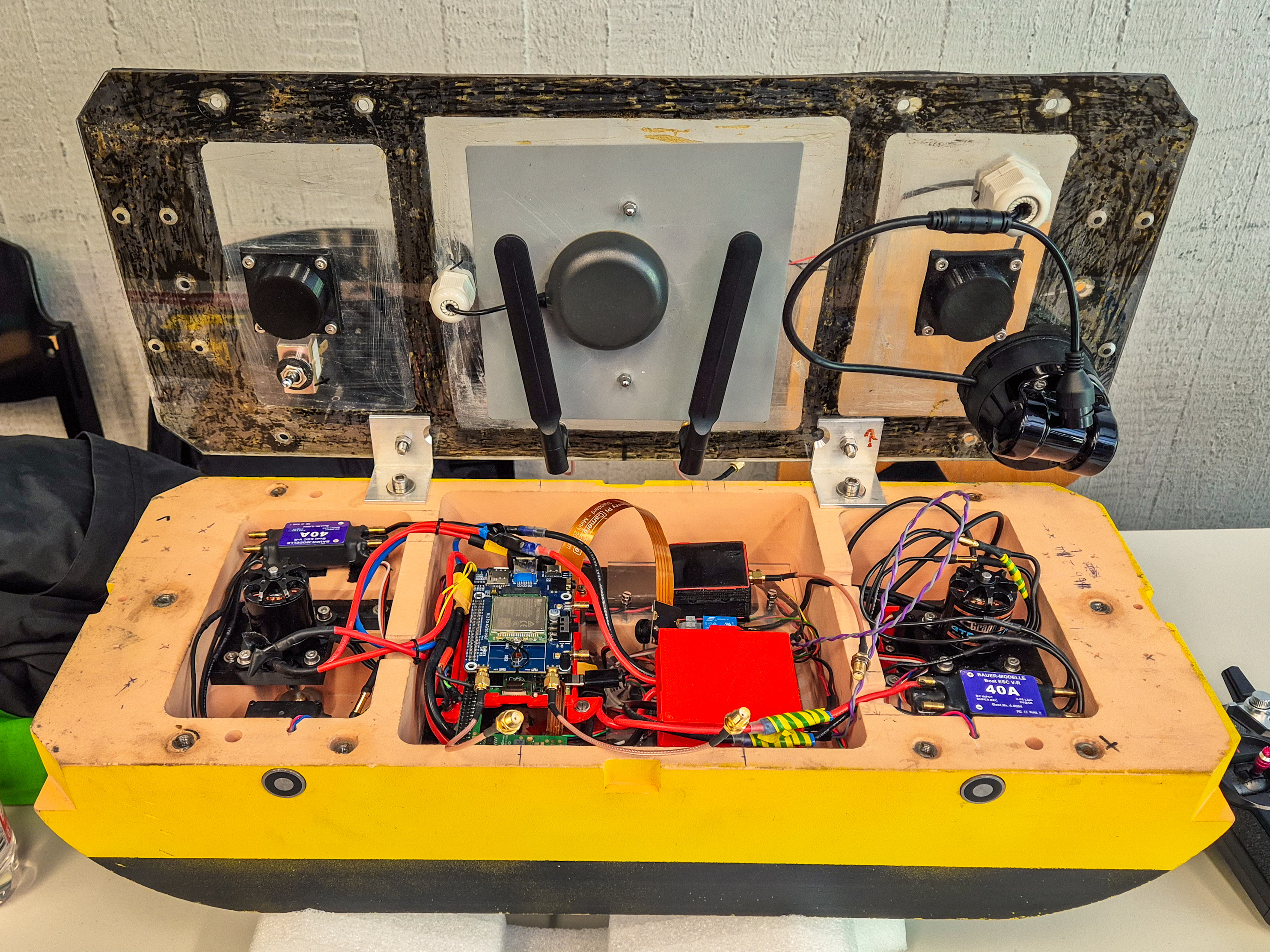
Nobody was at the stand when I was around, but they had a couple of diagrams showing their architecture, which included micro-ROS, ROS 2, Pixhawk, and Foxglove for visualization. I wish I could ask them more questions in person.
Seeed Studio
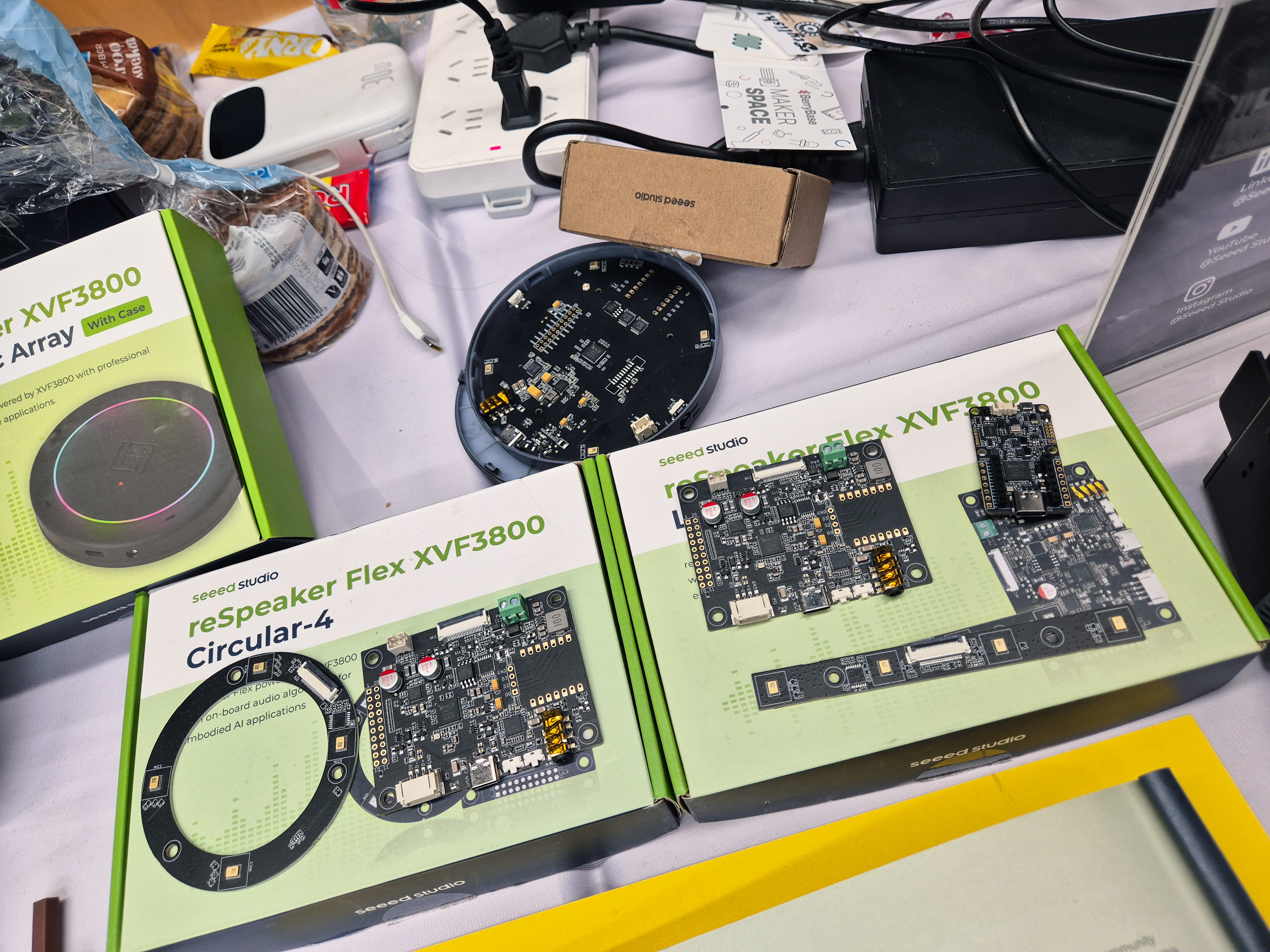
It was really nice to see Seeed Studio at the event. I've been buying their products for years, and I'm especially a big fan of their XIAO series of microcontrollers. While they had a lot of them at their booth, and they even gave one to attendees in their goodie bags, a few other things stood out for me:
- reSpeaker: a series of microphone-based products for all sorts of applications, including AI and robotics. I really liked their circular microphone array that seemed perfect for my LeKiwi build. I've got an AI agent running on it, and I've been thinking about interacting with it using my voice. I also learnt that their linear microphone array is the same one that is used in the Reachy Mini, and turns out Seeed manufactures some other components for it.
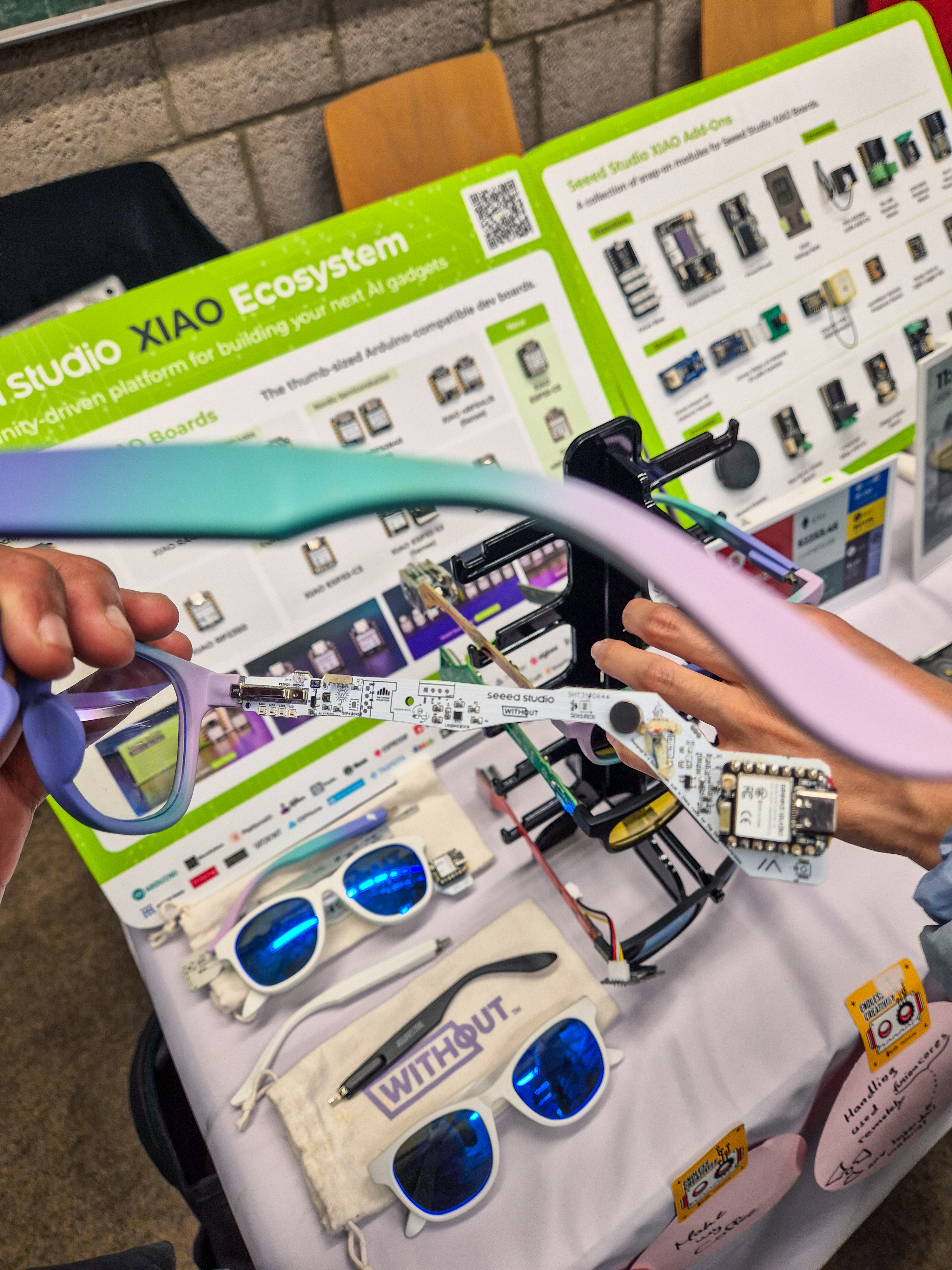
- Smart Glasses Project: A collab with an independent creator whose name I didn't quite catch. I really liked the idea of replacing the stem of an off-the-shelf pair of glasses with a PCB that includes a XIAO board, a battery, and a vibration motor. And voila, you have a pair of smart glasses. Not Meta Ray-Ban territory, but a solid DIY starting point.
- reBot Arm: A 6+1 DoF, ~4.5 kg robot arm with a 1.5 kg payload, paired with the StarAI Leader Arm for teleoperation. I had a nice conversation with Jinger Zeng from Seeed's Developer Relations about it, and other robotics products from Seeed, like the LeKiwi (yes, my project is built on top of a Seeed product). When she realized I was a robotics engineer, she asked if I could fix their stuck demo, and even though I had never worked with the reBot arm before, I wasn't going to say no. I expected to dig through LeRobot scripts; turns out Seeed has their own webserver-based GUI (I unfortunately couldn't find more information about this on their website) for setup, also compatible with SO100/SO101 arms. The demo was back up in minutes, all thanks to the GUI. I'll be trying this with my own SO100 when I start working on it.
https://x.com/kamathsblog/status/2058621048694755336
Badge Hacking
Available on both days, the badge hacking area had a community-contributed box of components and everything you needed to get started. I began by soldering the coin cell battery and switch, which powered the badge, including the SAO (Shitty Add-On) connectors - my first encounter with SAOs, custom add-ons that people build and trade at such events. Several attendees had entire backpacks covered in them. Unfortunately, I didn't get pictures, but some were really creative.
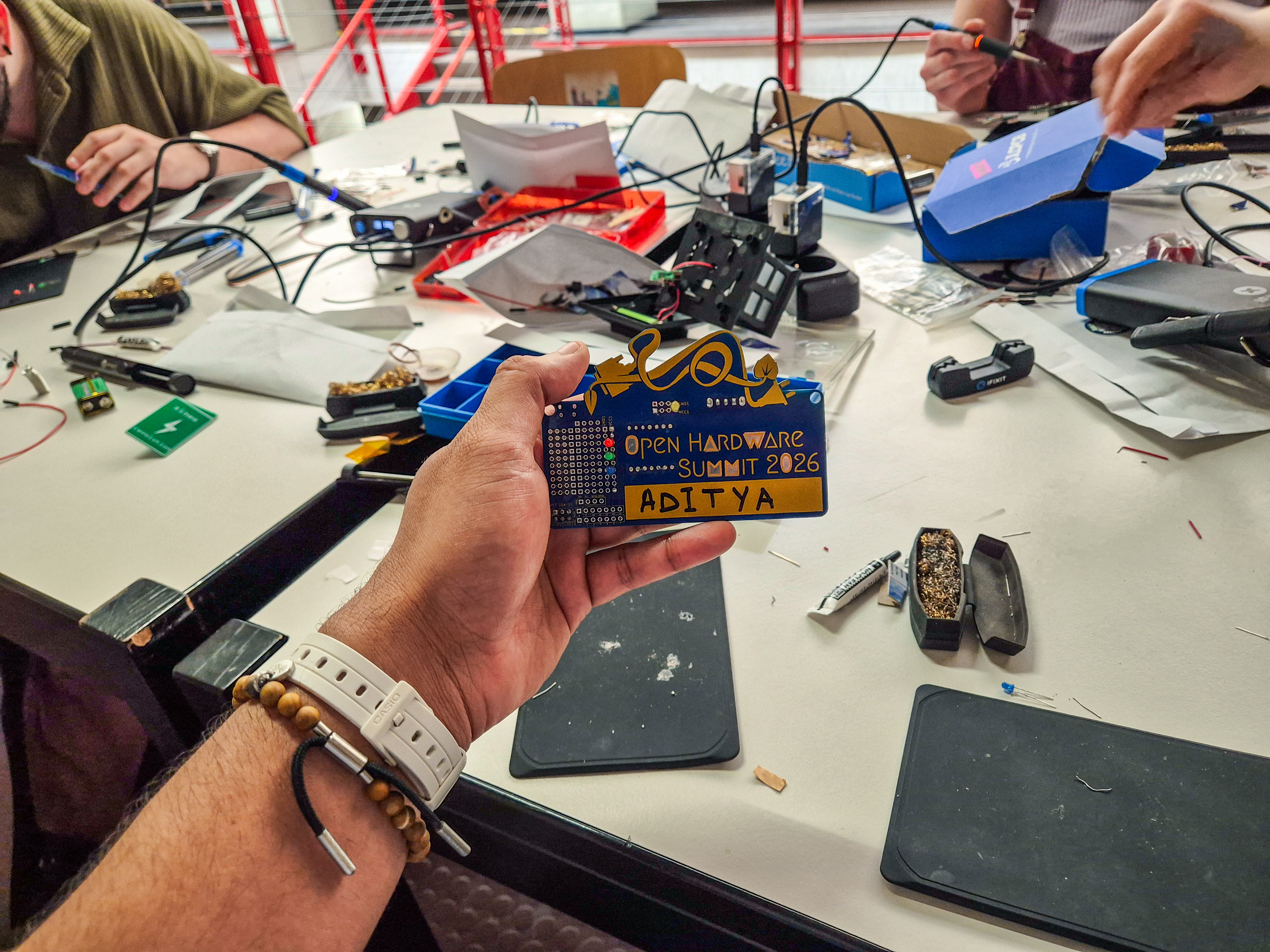
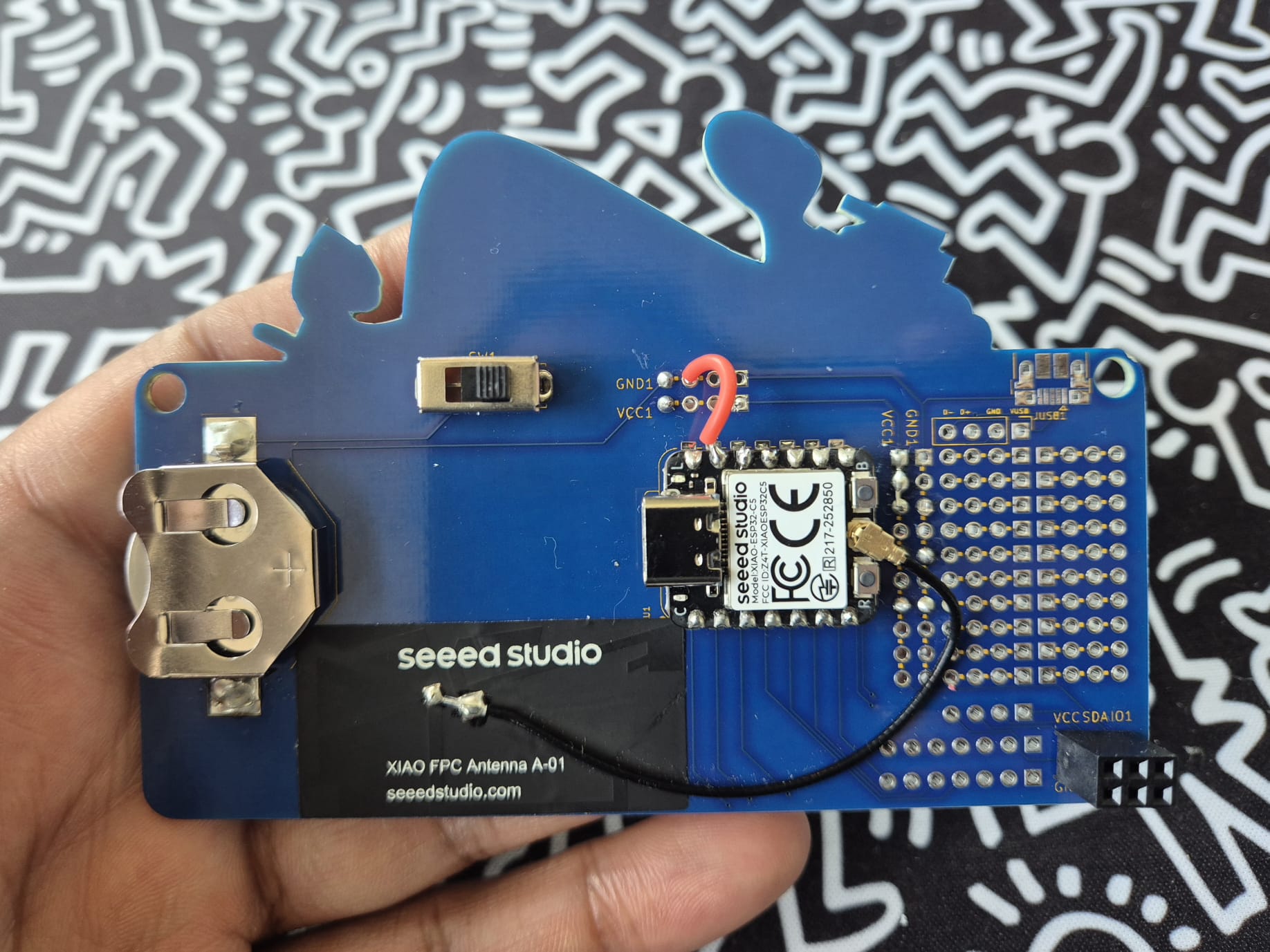
I made a couple of mistakes: installed the SAO connectors backwards, and forgot to add resistors to the LEDs, so they now light up with uneven brightness. I'll fix them when I get the chance. I also added the XIAO from the goodie bag and soldered it directly without headers (like a psychopath); I have way too many of them at home, so I can afford to fix one to this badge permanently.
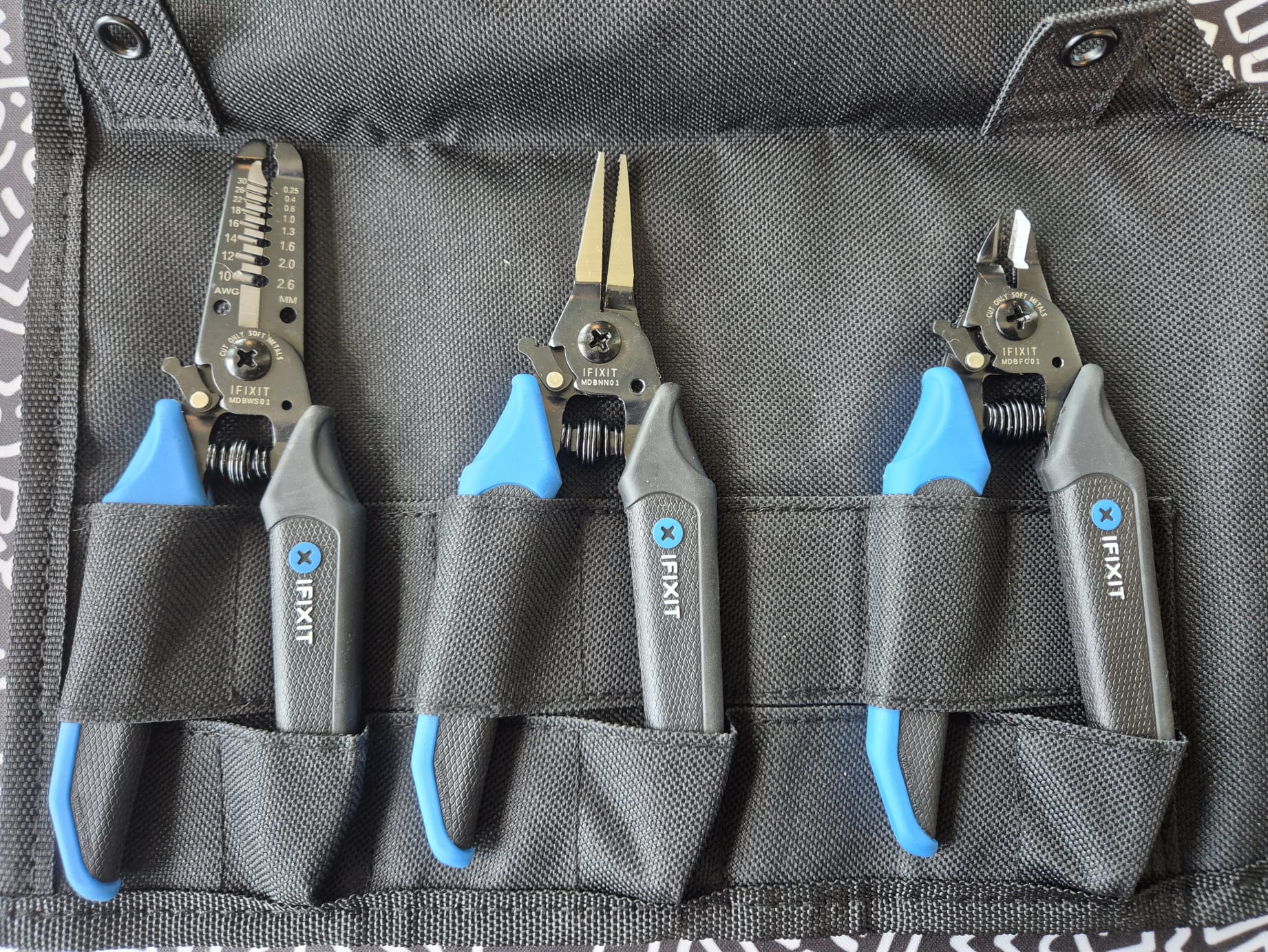
This turned out to be the best place to network - helping people with builds, picking up tips, and making new friends. The common consensus on the soldering tools was that Pinecil or similar products were far superior to what was provided, and I agree. The iFixit flush cutters, on the other hand, were superb, and I ordered a set on my way back.
Workshops
There were some really cool workshops on Day 2, but I had already made plans for the day, so I didn't register for many. I had free time in the afternoon, so I decided to join the KiCAD workshop by cpresser. It is a shame that all the workshops that I wanted to attend were during the same time slot, so I picked one that will actually be useful to me.
I had attempted to learn KiCAD a few times before, but had given up since the interface isn't beginner-friendly, especially when you're learning on your own. This one-hour session walked through the full PCB design workflow from schematic to routing, and suddenly, everything clicked. I'm excited to see what I can actually design now.
During the workshop, one attendee followed the entire exercise on a Steam Deck. I already use mine for programming, controlling, simulating, and visualizing robots. Turns out KiCAD installs natively without Distrobox workarounds, same for FreeCAD and OrcaSlicer (although I haven't tried those yet). The Steam Deck might genuinely be the perfect all-in-one device for end-to-end robotics development.
https://x.com/kamathsblog/status/2059015501385236758
Turning 33
Day 2 was my 33rd birthday. My only commitment was a KiCAD workshop, so I spent the morning at the Berliner Dom, grabbed souvenirs at the Humboldt Forum, and stopped for a smoothie in the courtyard—then realized I hadn’t installed KiCAD. I downloaded it over the free city Wi‑Fi and, while waiting, connected to my LeKiwi in Eindhoven; within a minute, I was visualizing the robot and driving its motors with almost no lag, hundreds of kilometres away.
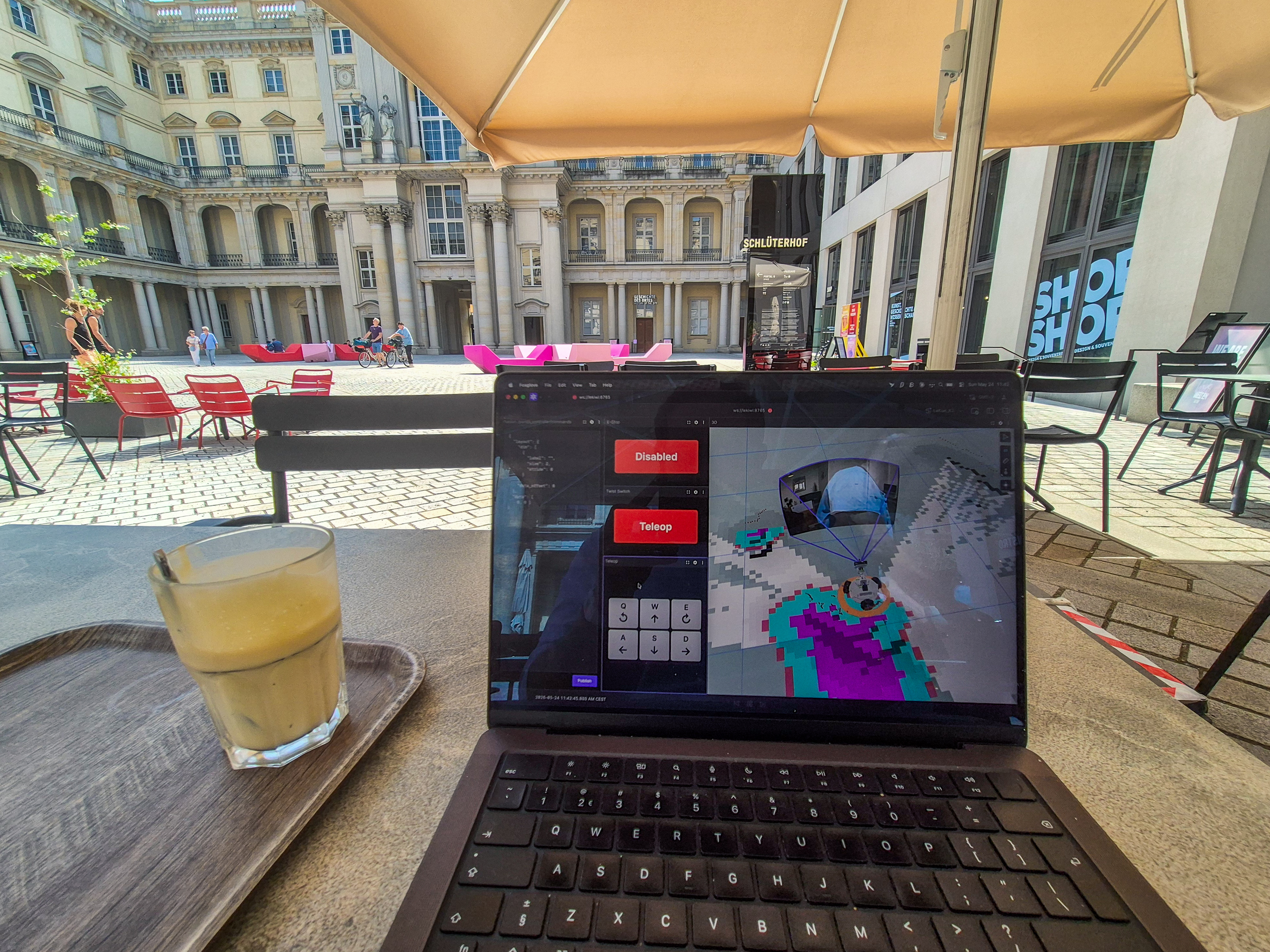
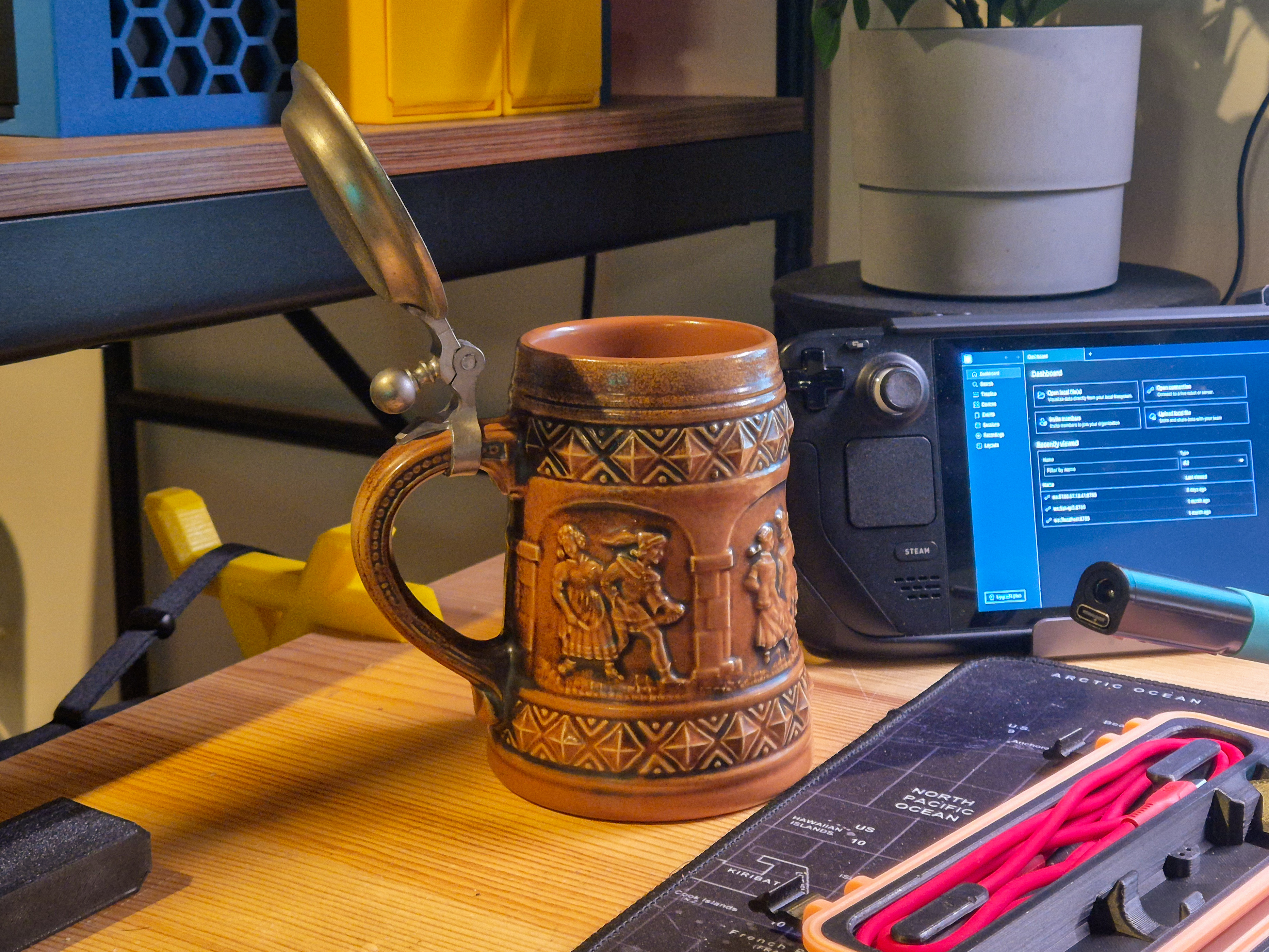
For lunch, I had the best döner of my life - Dutch places really need to up their game, but maybe that’s for the best, or I’d eat it every day. Exhausted and overheated, I headed back to TU Berlin for a few unconference talks before the workshop. On the way, I stopped by an antiques market and bought myself a vintage beer stein and a model digger as birthday presents. Although I don’t drink anymore, the stein is already serving as a water glass for summer.
Wrapping up
This was my first hardware-focused event, and it felt nothing like developer conferences like ROSCon. Instead of attendees trying to talk about work or trying to sell you their product, people genuinely wanted to help, share, and learn - probably because most attendees are builders first, not rather than founders or employees. I caught up with Kimberly McGuire, a friend from ROSCon and fellow independent roboticist, and we talked about all things robotics. I also met other solo entrepreneurs, engineers, scientists, and artists - people from all sorts of different backgrounds; the mix of electronics with robots, music, textiles, health, and art made for genuinely interesting conversations.
As for project ideas, after seeing custom badges everywhere, I now want to make a badge for myself that I can wear to such conferences. I also want to build the AirGradient and OpenScan kits when I get the chance. I've ordered the reSpeaker kit from Seeed Studio, and I'm currently designing parts to attach it to the LeKiwi while it is in transit. To make space, I've removed the webcam from the LeKiwi base; having two cameras was a little too much anyway. The OAK-D S2 on the pan-tilt mechanism is now the only camera on the robot.
Several talks hit close to home: AirGradient's scaling story, Clemens's EU certification guide, and the unconference session on starting a hardware company. I've been considering moving away from consulting and freelancing, focusing instead on hardware product development, sustained by technical content creation. The talks and the conversations with other attendees validated that this pivot isn't a bad idea, even if it won't be easy.
I'm definitely looking forward to more hardware events now. I have the Eindhoven Maker Days to look forward to in September this year, and I'm already making plans for the Rome Maker Faire in October. I missed the Hackaday Europe event this year, but it is on my radar for next year. I don't know where the next OHS will be, but if it is in Europe, I'll definitely be there.