
ROSCon UK 2026 - Edinburgh 🏴
Highlights from my first local ROSCon - as an attendee and speaker
It's been two weeks since I returned from the UK, and I can't stop reminiscing about the week that came before it: three days of robots, talks, and the amazing people at ROSCon UK, including my first time speaking at one. So I'd better write it all down while the memories are fresh.
ROSCon UK is the UK's local ROS conference, held in Edinburgh this year. This was the second edition, and after hearing great things about the first one in 2025, I couldn't miss it. I had also been selected to present a 45-minute deep-dive on sts_hardware_interface, more about it as well as the deep-dive format later. In parallel, I was also allowed to register as media, since I write a robotics blog and have unofficially covered ROSCons before - a great opportunity to get Kamath Robotics some exposure.
The conference ran from October 21 to 23 at the University of Edinburgh, with tours on day one, workshops and deep dives on day two, and the main talks on day three, plus drinks and networking every evening.
Disclosure: As a media attendee, I received complimentary tickets from the Tartan Robotics Collective, the organizers of ROSCon UK. For my talk, I represented Seeed Studio as a Robotics / Physical AI Ambassador, and Seeed sponsored my accommodation in Edinburgh. As always, these are my own opinions.
Day 1 - Tours and BoF Sessions
I had a busy day ahead as I had registered for both the tour options: the National Robotarium in the morning, and the Informatics Forum and Bayes Centre after lunch.
National Robotarium Tour
After collecting my badge, I hopped on the shuttle to the National Robotarium, the UK's center for robotics and AI research at Heriot-Watt University in Edinburgh.
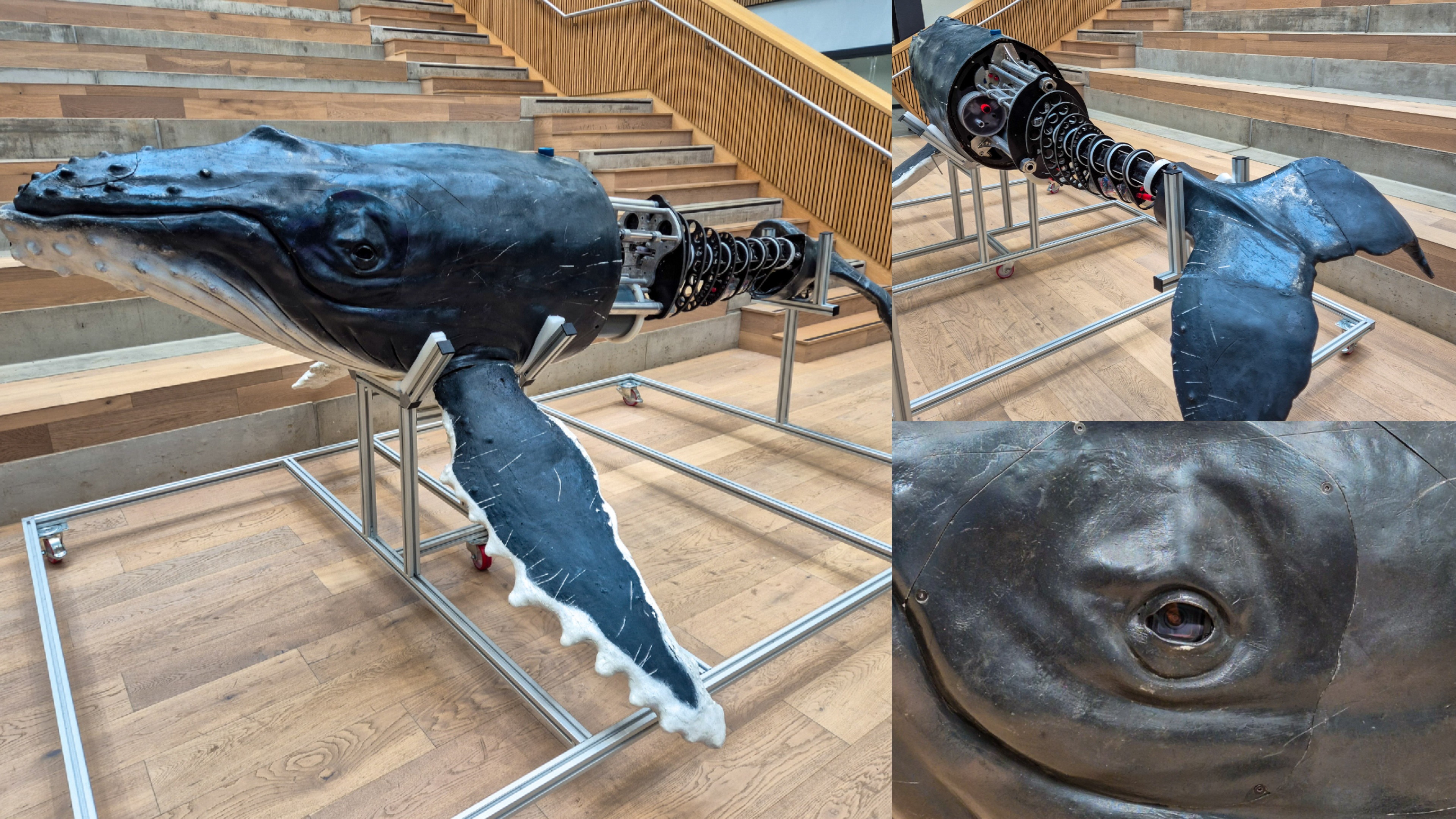
The first thing I saw as we walked inside was a humanoid by the entrance, but my eyes went straight to a robotic baby whale by the stairs - a robot that the BBC used to film real whales in the wild, with a mechanical propulsion system and cameras in its eyes and mouth. I'd have loved to see it swim in real life!
After a quick welcome from Dr. Ingo Keller, we split into three groups. Mine started in the main lab, where a flight case was looping around on autonomous wheel modules from Norwegian company wheel.me - bolt one to each corner of almost anything, and it becomes a mobile robot. What a clever concept!
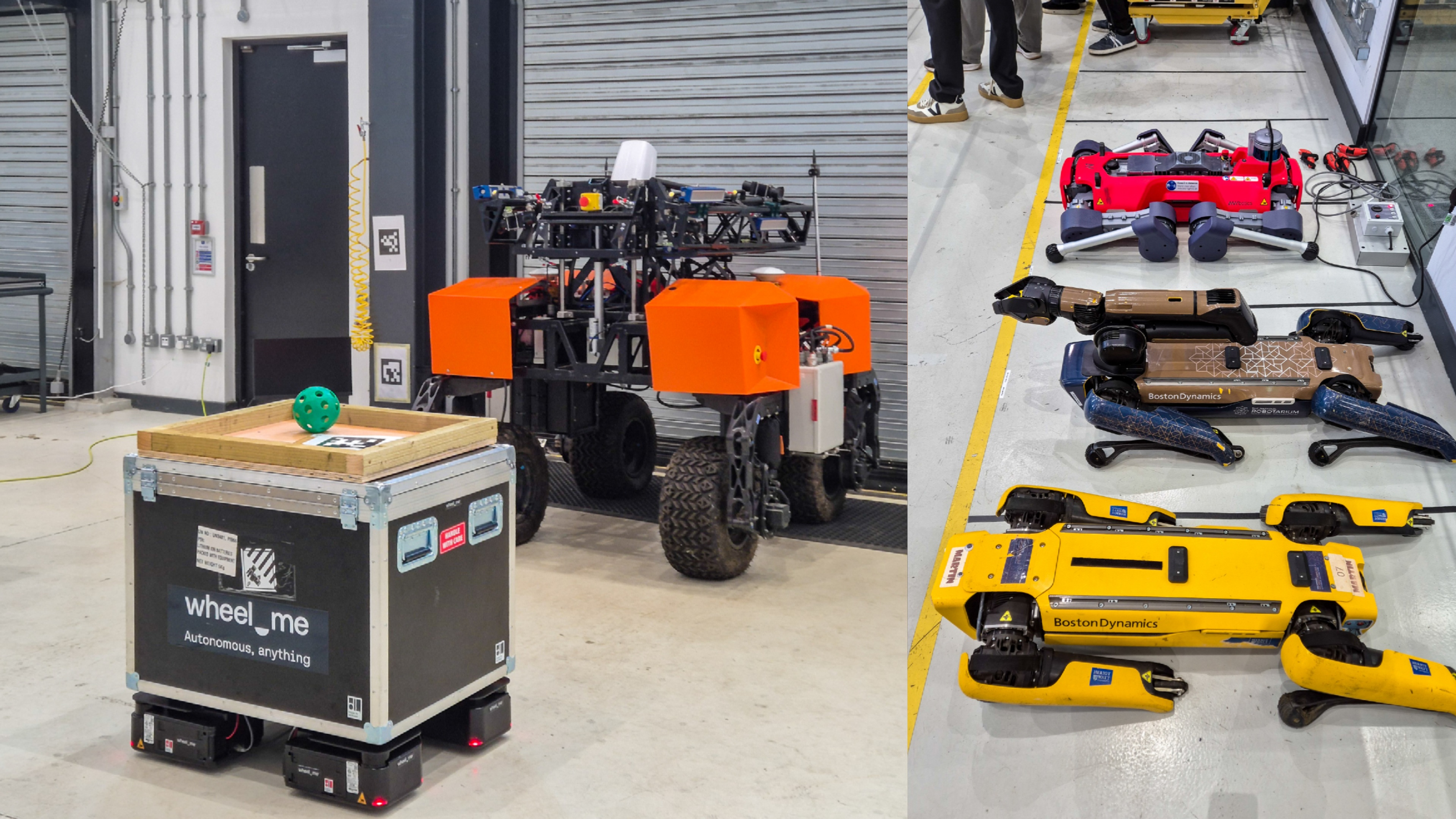
Next was an Open-RMF demo by Sean Katagiri: Sean selected a color on a microcontroller-based control box, and a mobile robot fetched it from a stationary robot arm station and brought it back. It was a simple demo, but watching a real-life Open-RMF demo was impressive. I also got some ideas for my own robots, but I will leave those for another post. Sean's point stuck with me: while the industry chases general-purpose robots, reliable specialized robots that work together are the way forward. I would see this point being repeated in the following days, and I couldn't agree more.
https://www.youtube.com/watch?v=hQ_Su_ec5DQ
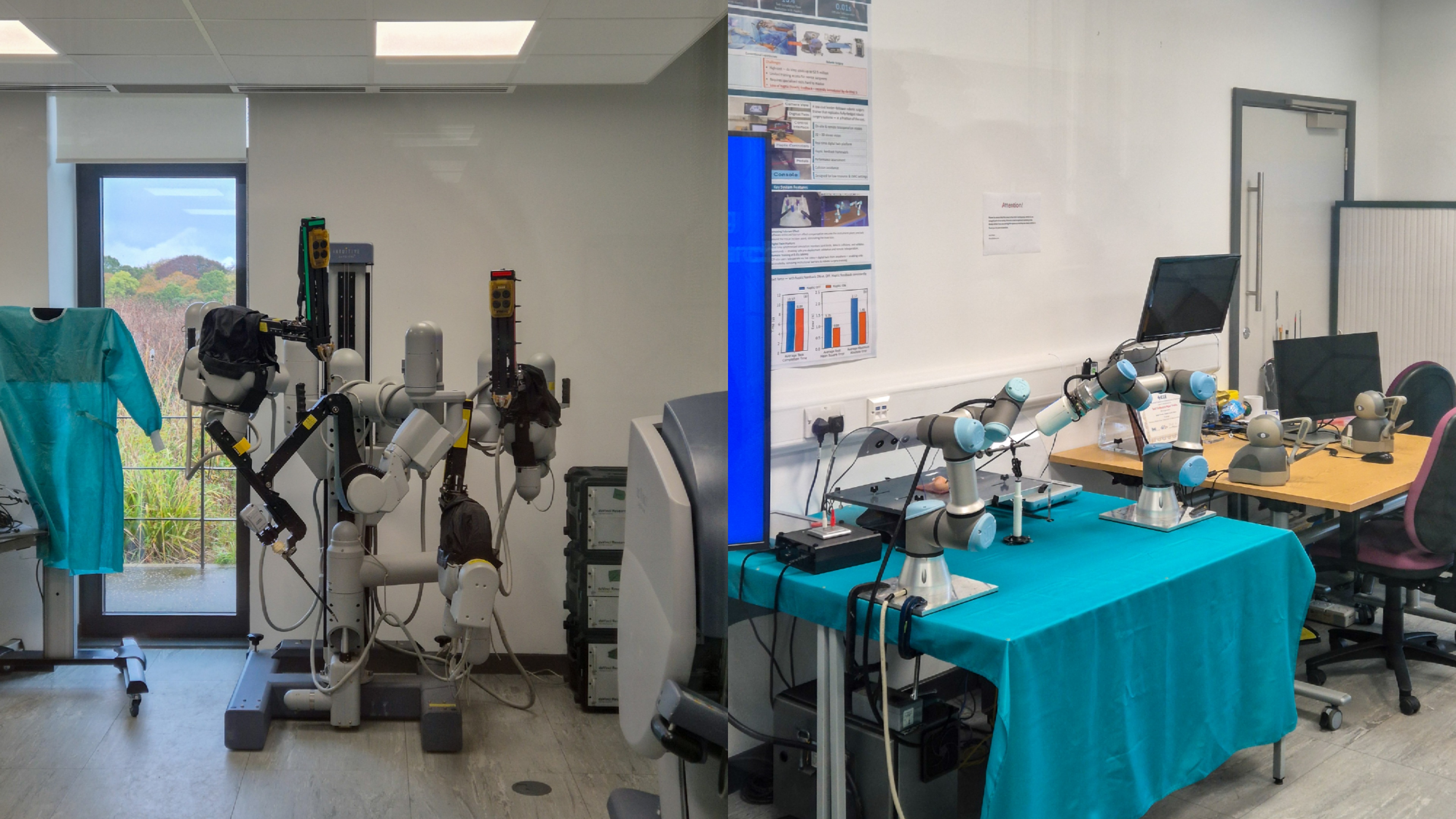
We then toured a few labs with all sorts of robots, including a replica of a senior-living facility, where researchers study how robots, from mobile manipulators to telepresence robots, can help elderly people live independently. One of the highlights for me was the da Vinci surgical robot, which I'd only ever read about, next to a much more affordable alternative built using two Universal Robots arms and haptic controllers.
On the way out, we stopped by the humanoid at the entrance: Ameca, by UK-based Engineered Arts. It can't walk or do backflips, but its expressive face and hands, connected to a conversational LLM, made chatting with it surprisingly lifelike (and also kinda creepy).
https://www.youtube.com/watch?v=_zNSeZ3CUiU
I left extremely impressed - not by any one robot in particular, but by how much they had going on in one building, especially the deep collaboration between academia and industry. I'd love to see this model replicated back home in the Netherlands.
Informatics Forum and Bayes Centre Tour
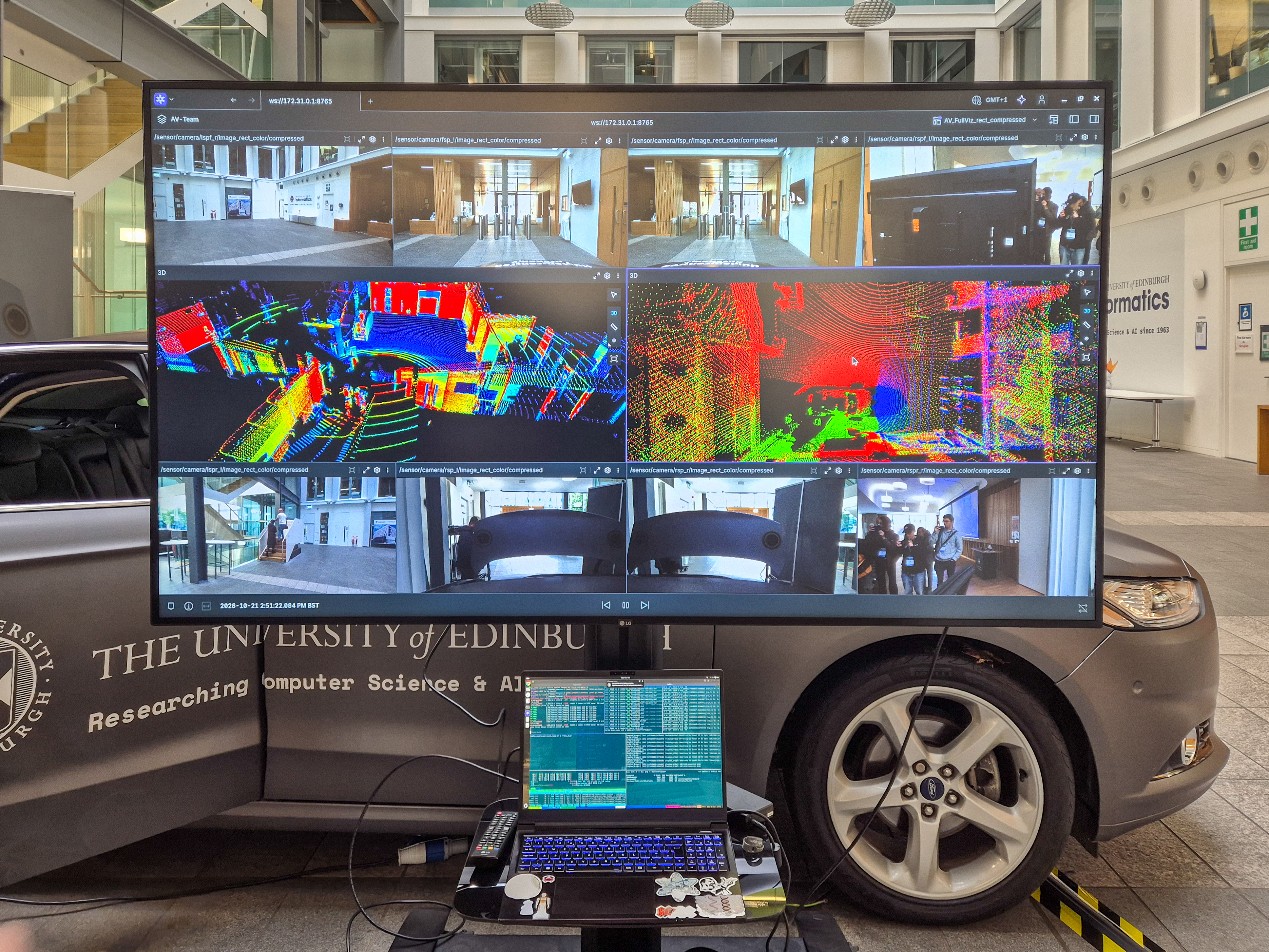
After lunch, a shuttle took us to the Informatics Forum, where one of Five AI's autonomous vehicles was parked at the entrance - donated after it was acquired by Bosch.
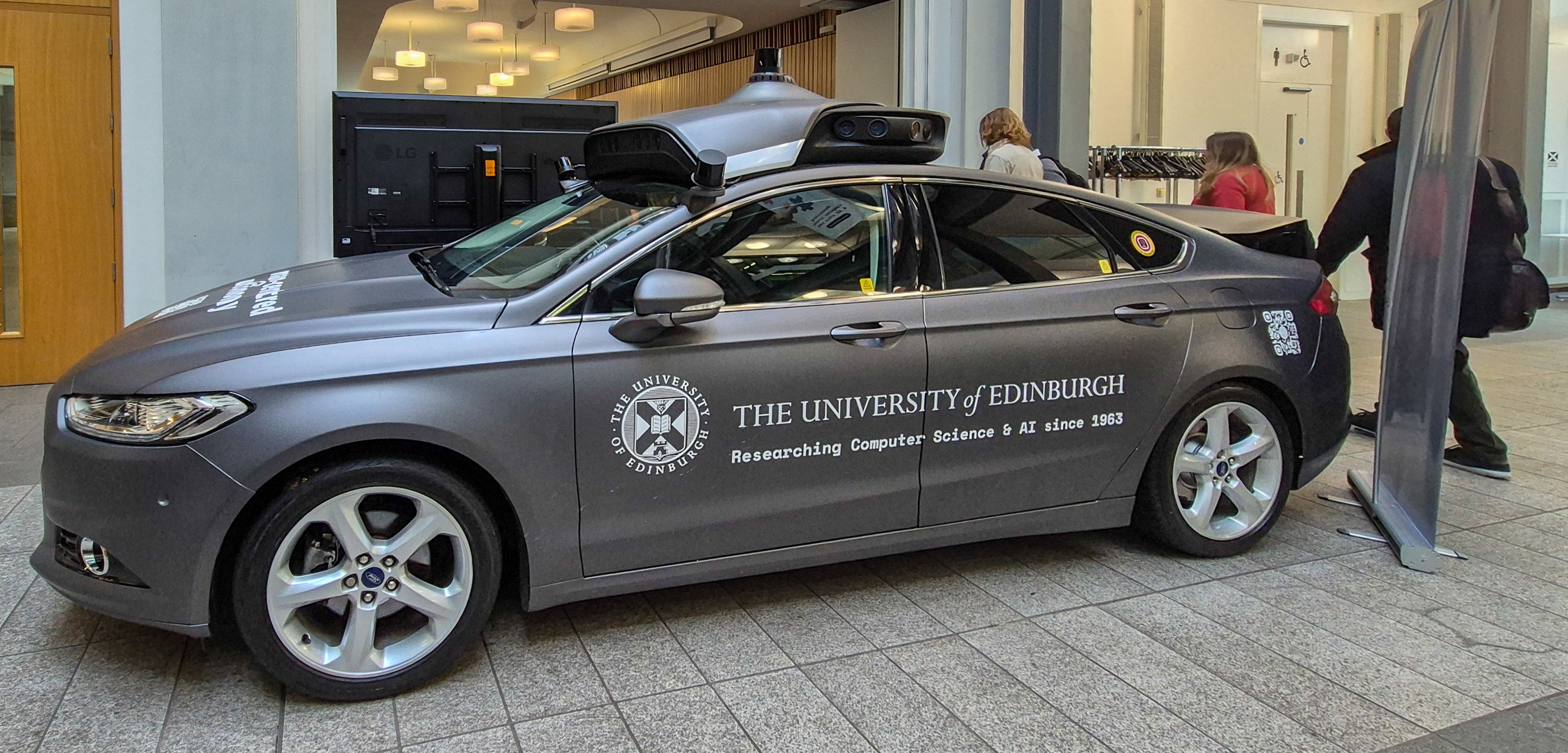
After a welcome from Dr. Alejandro "Alex" Bordallo Micó, my group stayed by the car for a presentation on their autonomous driving research, while Alex showed a live Foxglove visualization of its cameras and LiDARs.
We then walked next door to the Bayes Centre, the university's hub for data science and AI, where we visited a few labs.
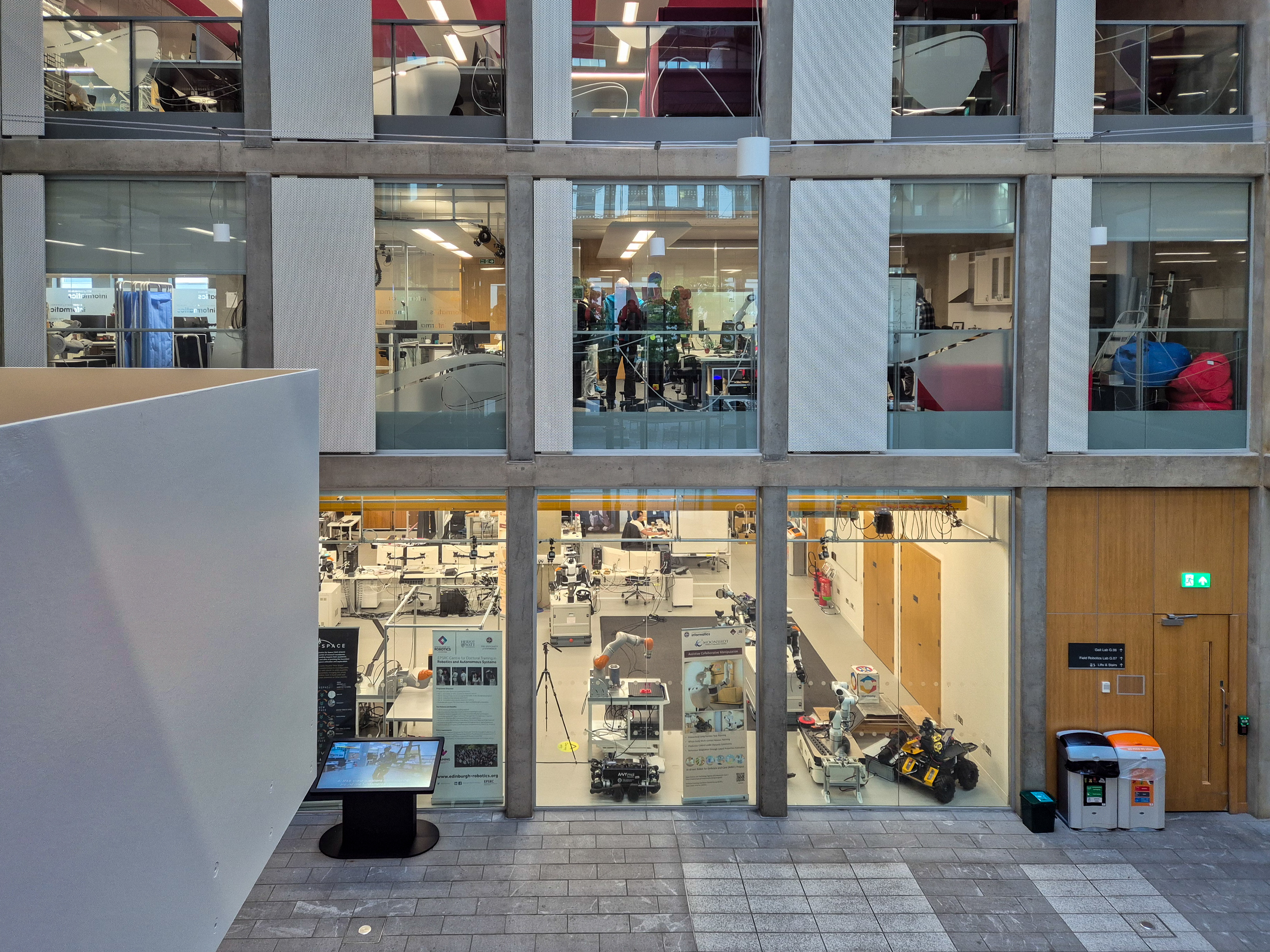
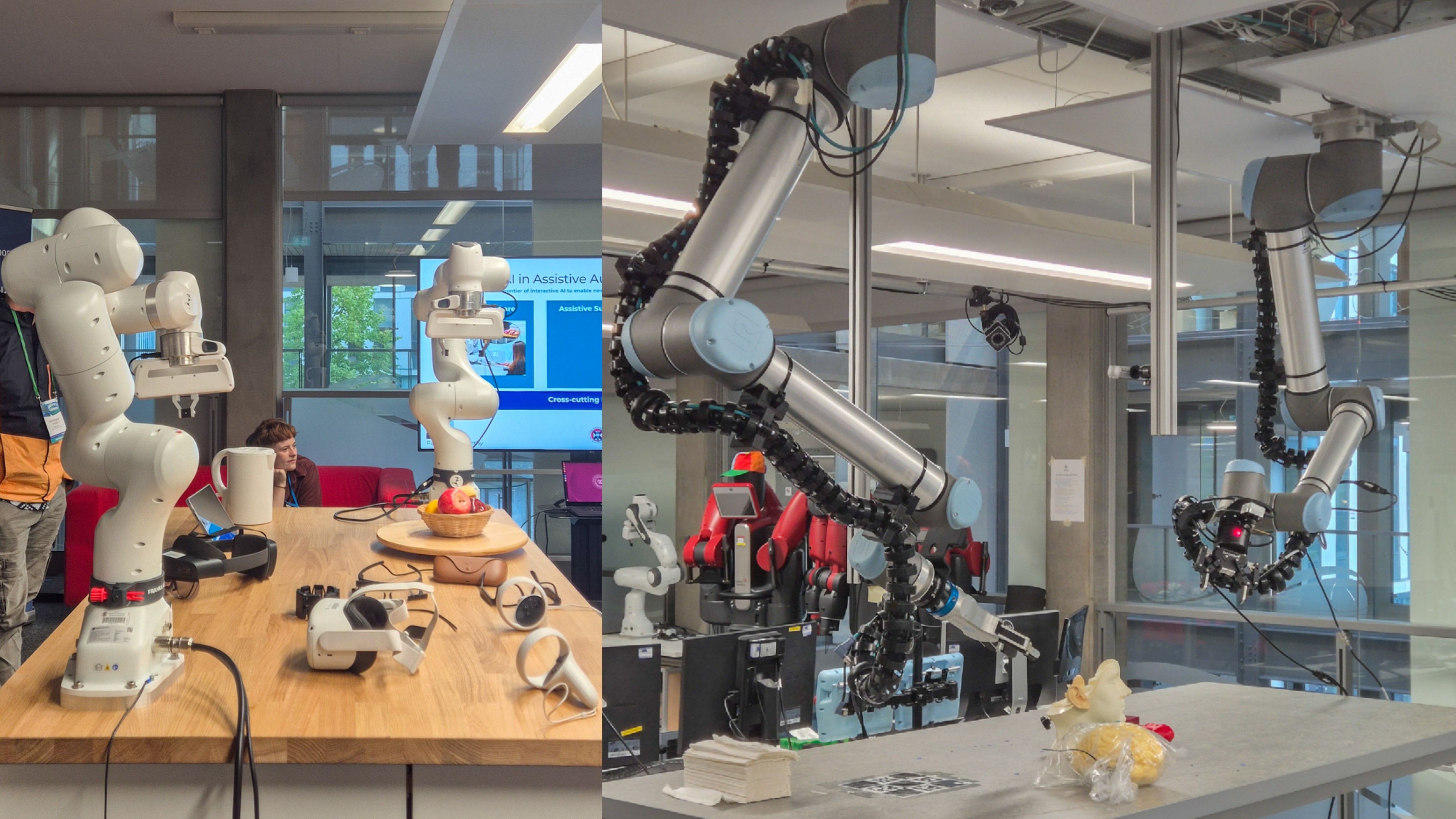
In the first lab, we learned about the work they were doing with manipulators using a whole range of input devices ranging from smart glasses to myoelectric bands, replica environments like a kitchen and a fake brain to test surgical applications, and some familiar hobbyist hardware like SO-101 arms, and IKEA carts that will soon become XLeRobots.
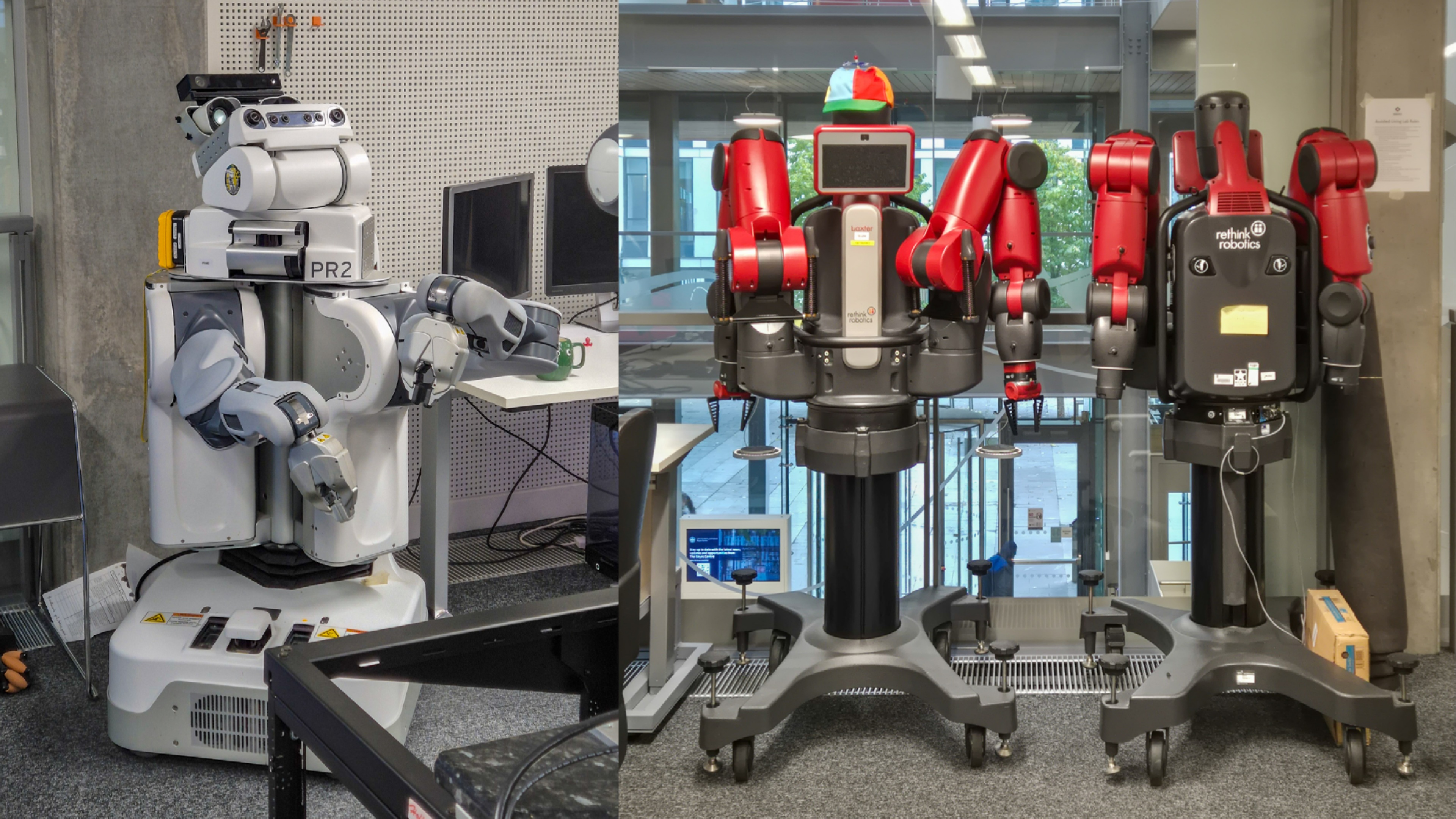
My favorite part was finally seeing a PR2 in real life - the robot from Willow Garage that led to the origin of ROS. They also had a few Baxter robots, another famous robot from around the same time from Rethink Robotics.
In another lab, we saw applications with several of Kawada's NEXTAGE OPEN robots, alongside humanoids, mobile manipulators, and motion capture systems. Another incredibly cool robotics lab!
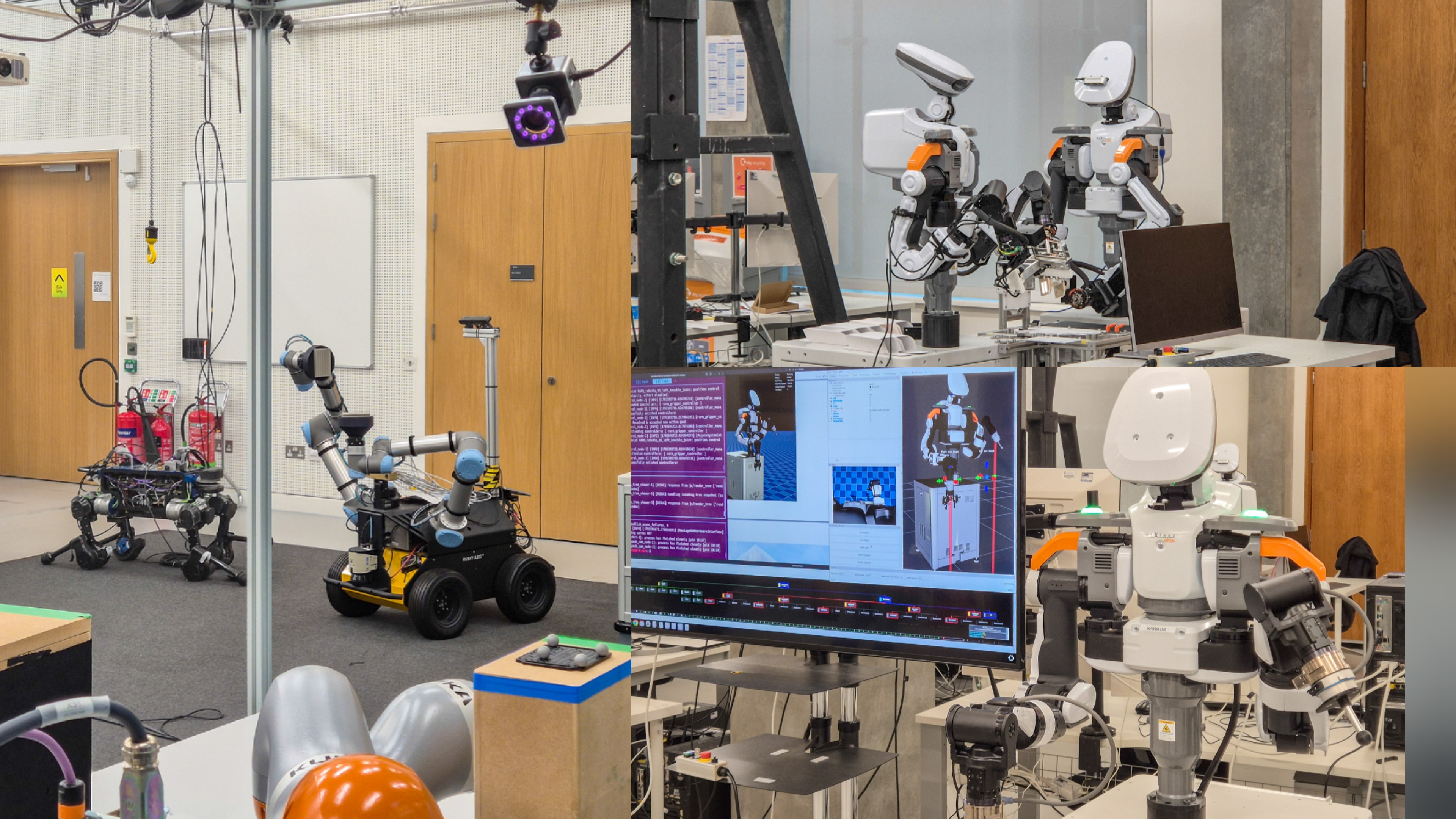
This tour was more academic than the National Robotarium, but just as interesting, from robots I'd only read about to new ones like the Kawada platforms. Heading back, I was honestly a little jealous: the University of Edinburgh's robot collection far surpassed anything we had at TU Eindhoven.
Reception
Day 1 ended with a reception and conference welcome in the exhibition area. There weren't many robots on display, but after the tours, I'd already had my fill. The exhibitors still had some really cool stuff to show, though, and if you want to see it for yourself, Aryan Jagushte, a new friend I made at the event, has published a video where the exhibitors explain their work:
https://www.youtube.com/watch?v=p9pMHtSD6bQ
Day 2 - Workshops and Deep Dives
I started Day 2 a little nervous - it was my first time speaking at a ROSCon. Luckily, the room where my talk was scheduled had an occupancy of about 40 people, so it was a little less intimidating. A strong cup of coffee helped too.
Note: To keep this post from getting too long, I'm only highlighting the sessions that were most relevant to me.
VSLAM on a Low-Cost Autonomous Rover
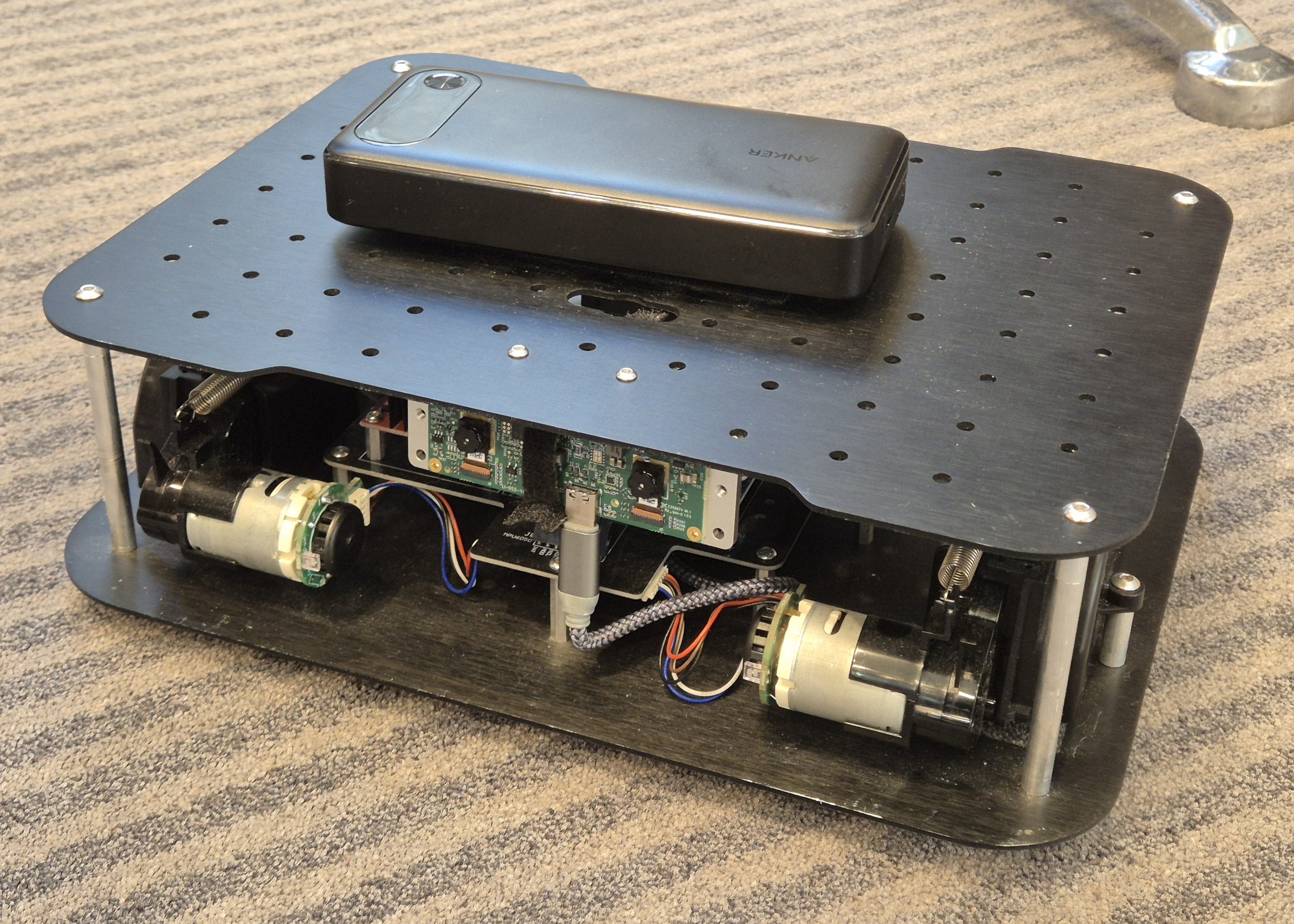
Michael Hart from Mike Likes Robots gave an excellent talk on VSLAM for his low-cost rover, covering the entire stack: building it, calibrating it, writing its ros2_control hardware interface, and navigating autonomously with Nav2. He wrapped up with a live demo of his rover mapping the room and navigating within it. His ros2_control section turned out to be a lifesaver for me an hour later, as I had some technical difficulties. If you want to learn more about this rover, Michael's YouTube series about it is a great place to start. Michael has also shared his ROSCon UK experiences on his blog; it is definitely worth reading (and much shorter than this one).
A Practical Guide to Writing ros2_control Hardware Interfaces
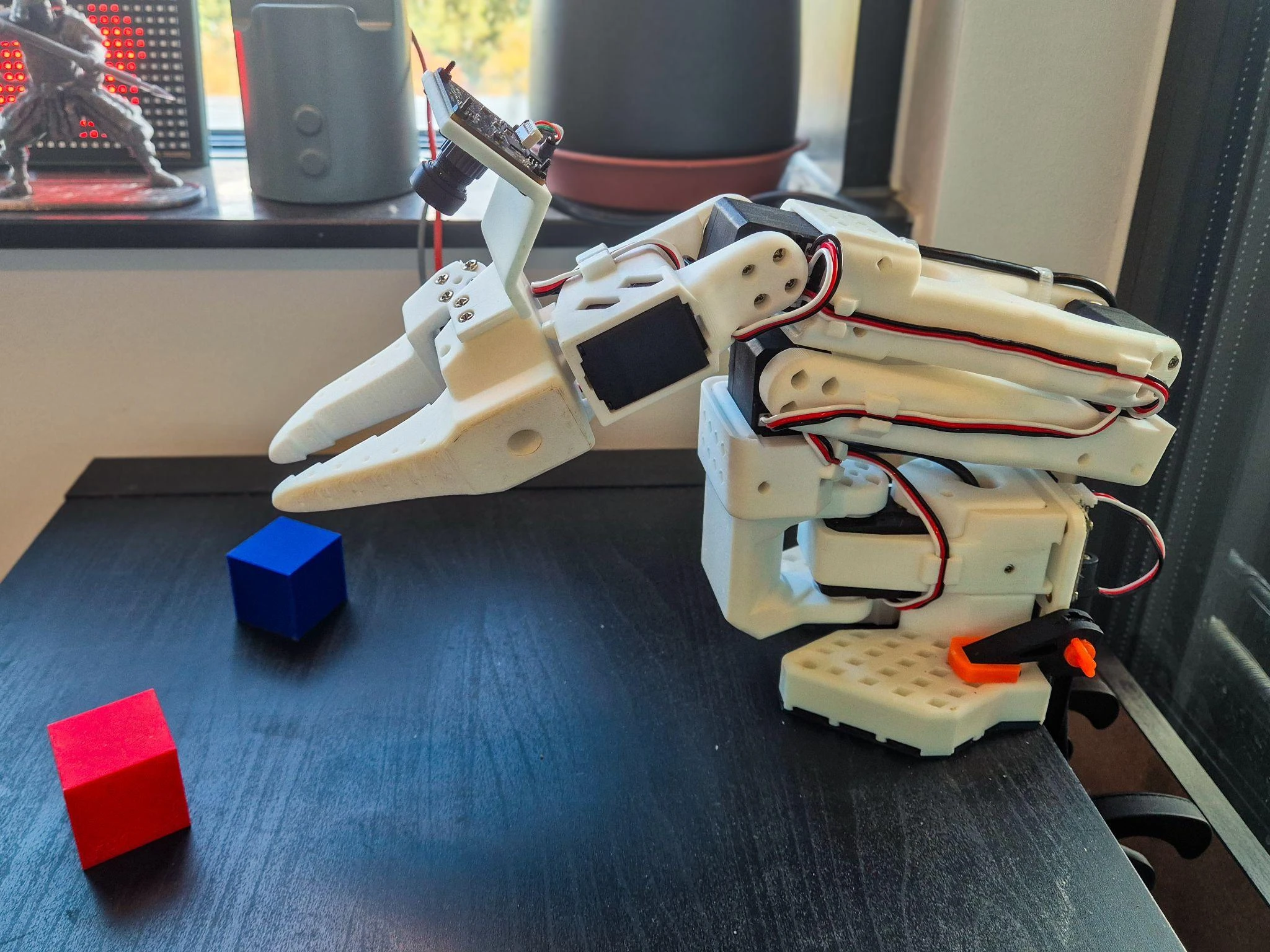
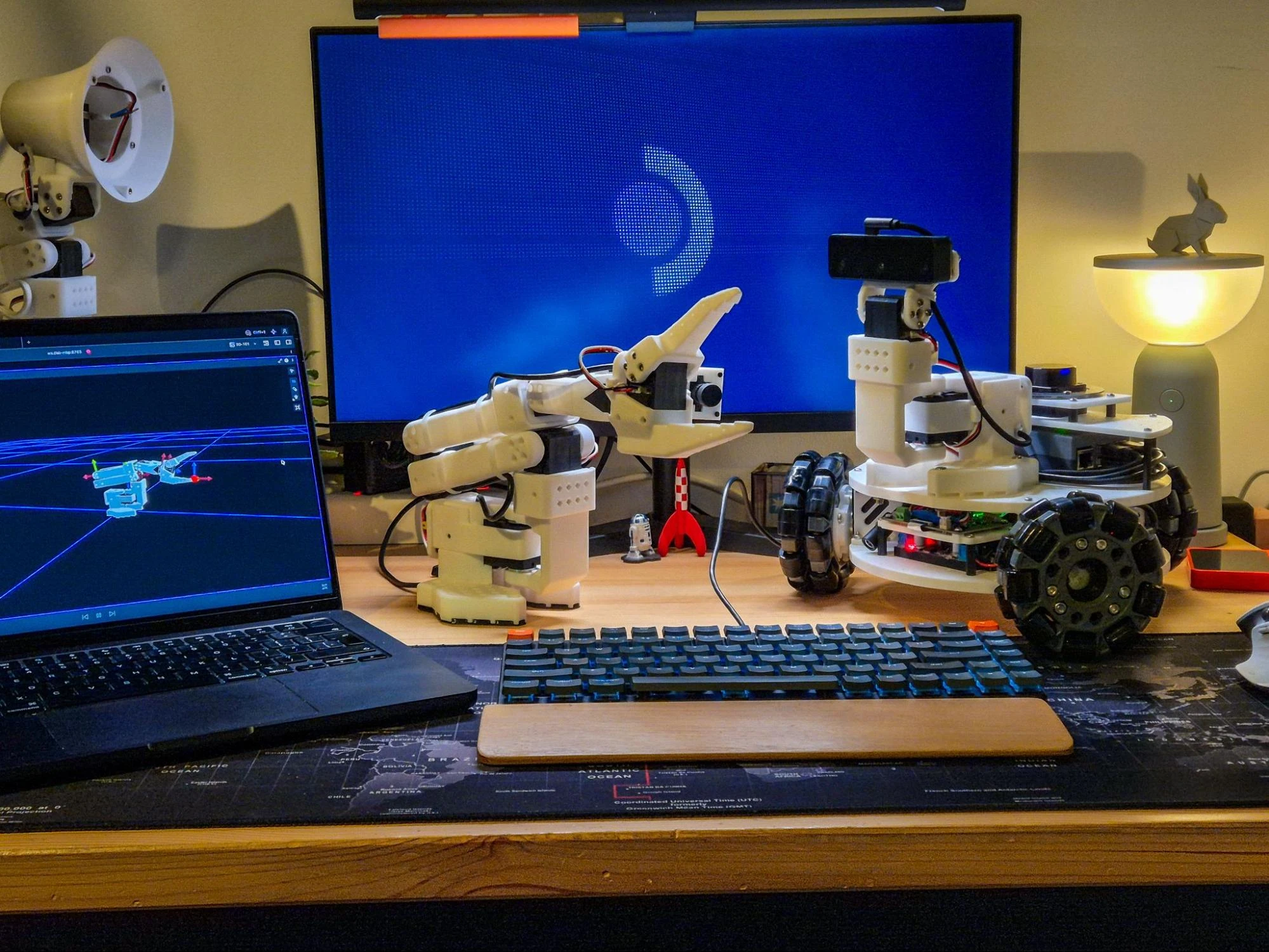
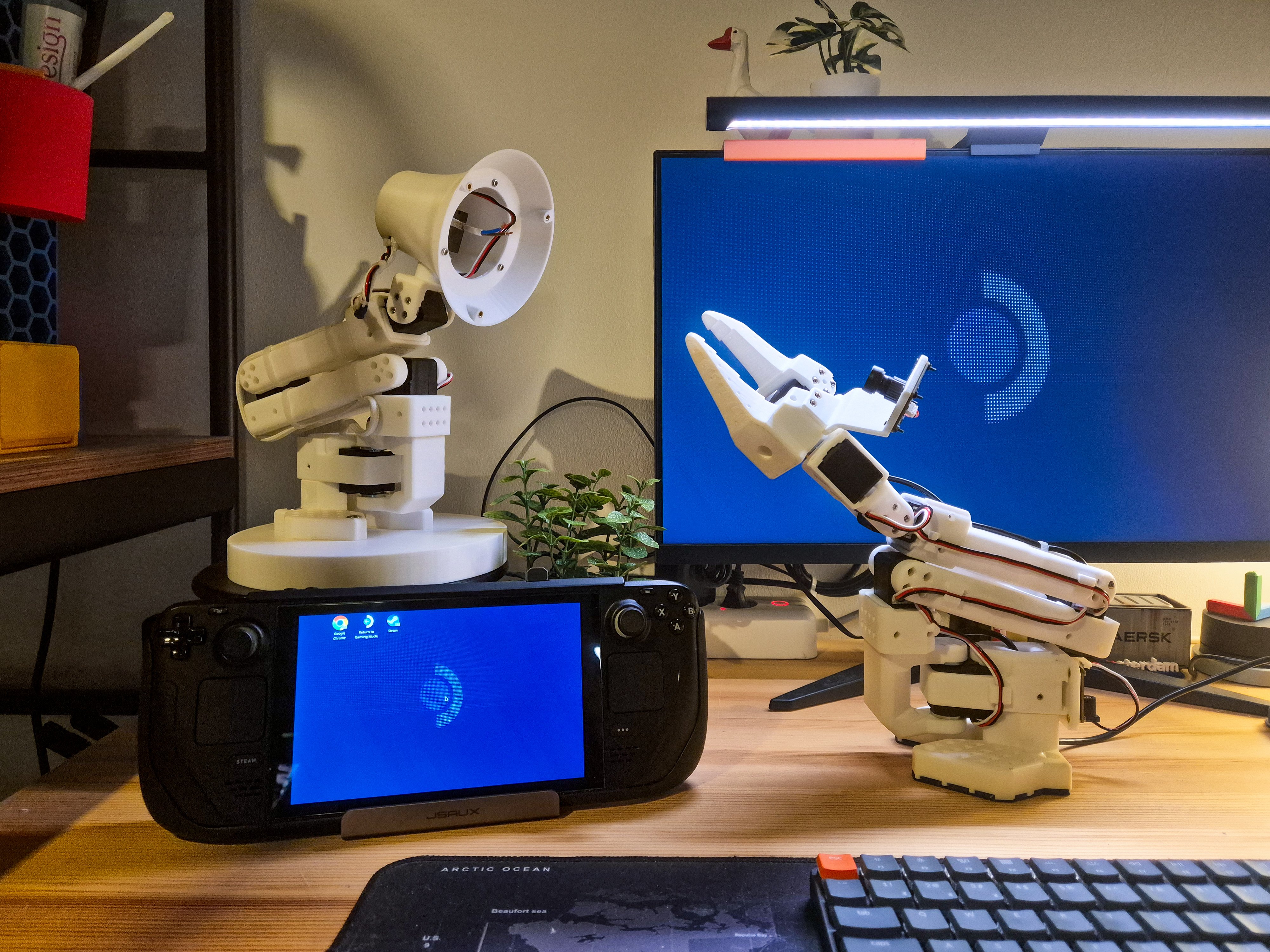
Finally, at the end of the morning deep-dive session was my turn, representing Seeed Studio. I walked through sts_hardware_interface for Feetech STS servos, with the SO-101 and my LeKiwi robot as case studies, plus a few demos. The goal wasn't to cover every technical detail, but to give the audience a mental model they could use to build hardware interfaces for their own actuators.
I was also glad to see Dr. Bence Magyar, one of the ros2_control maintainers, right up front. While he thought he was making me anxious, I genuinely appreciated his questions and comments. They not only helped the audience by providing context, but also gave me ideas for upgrading to ROS 2 Lyrical, where several of the features I touched upon no longer exist. For the full technical story, I'm currently working on a separate post, most likely for Seeed Studio's blog.
Between my nerves and the time I lost while trying to connect my MacBook to the screen, I completely forgot to ask someone to take pictures. So, here's one of my demos instead - a simulated robot in mock mode and the real robot, following the same pre-recorded movements, using sts_hardware_interface:
https://www.youtube.com/watch?v=wNTA957BtqI
ROS in the Field: Building Open Agri-Food Robotics Together
After lunch, I joined the agri-food robotics workshop - a series of talks related to robotics in agriculture. I sat through the first talk by Eliot Dixon from Roboverse Reply, on deploying robot fleets in the wild. My key takeaways:
- Robots from different manufacturers working together, with ROS and Open-RMF as the glue.
- Why horizontal integration works better: one system integrator supporting several robots beats each supplier supporting its own, with a third party connecting them to a central farm management system.
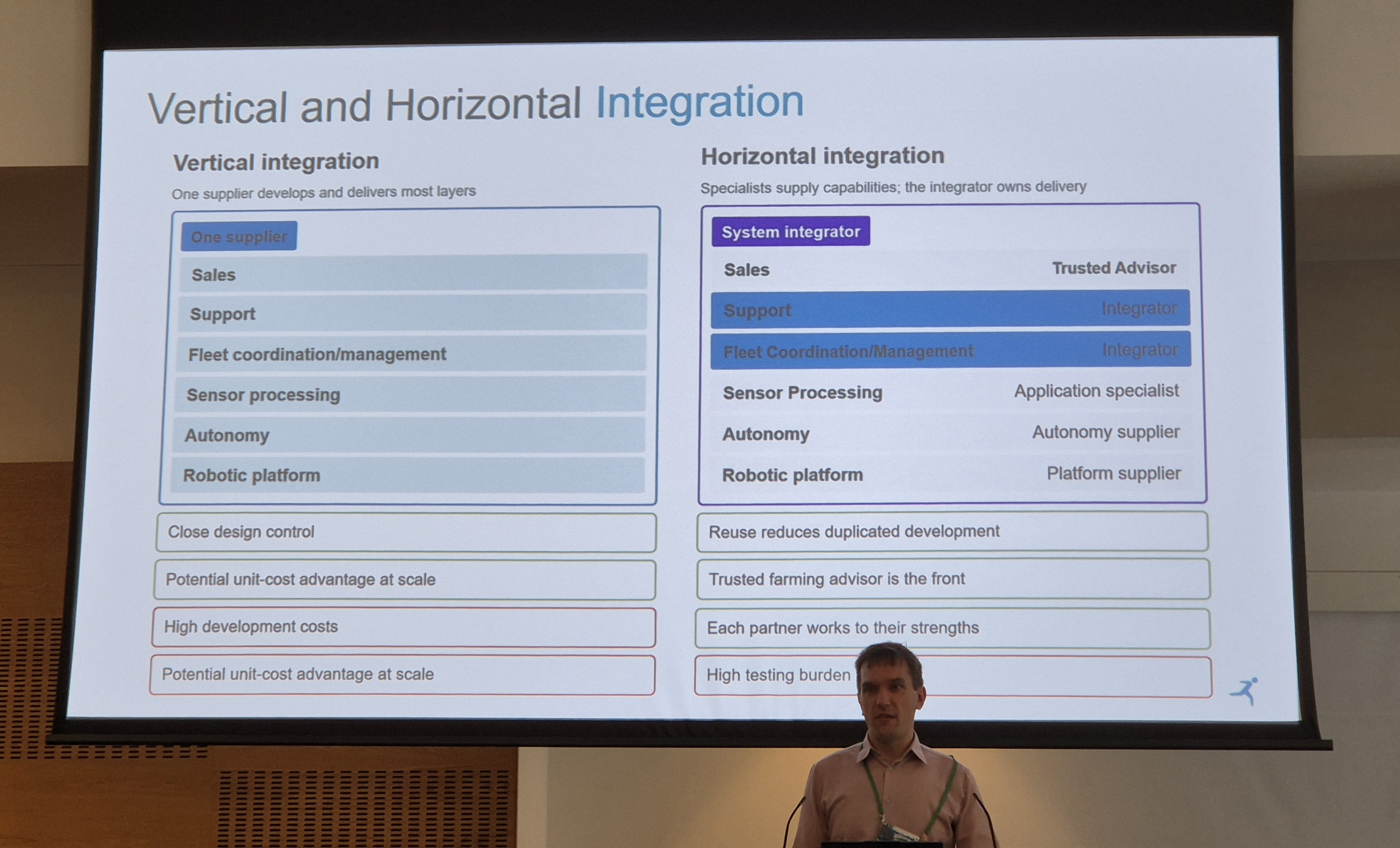
- Specialized robots, not general-purpose ones: A farm works best as an integrated system of affordable, specialized robots. Humanoids are unreliable, too expensive, and a maintenance nightmare on farms - echoing the demo at the National Robotarium the day before.
- Their own tool, CASCADE, for fleet configuration and orchestration, looks amazing for field deployments. It's a shame it's proprietary - I hope they open-source it someday.
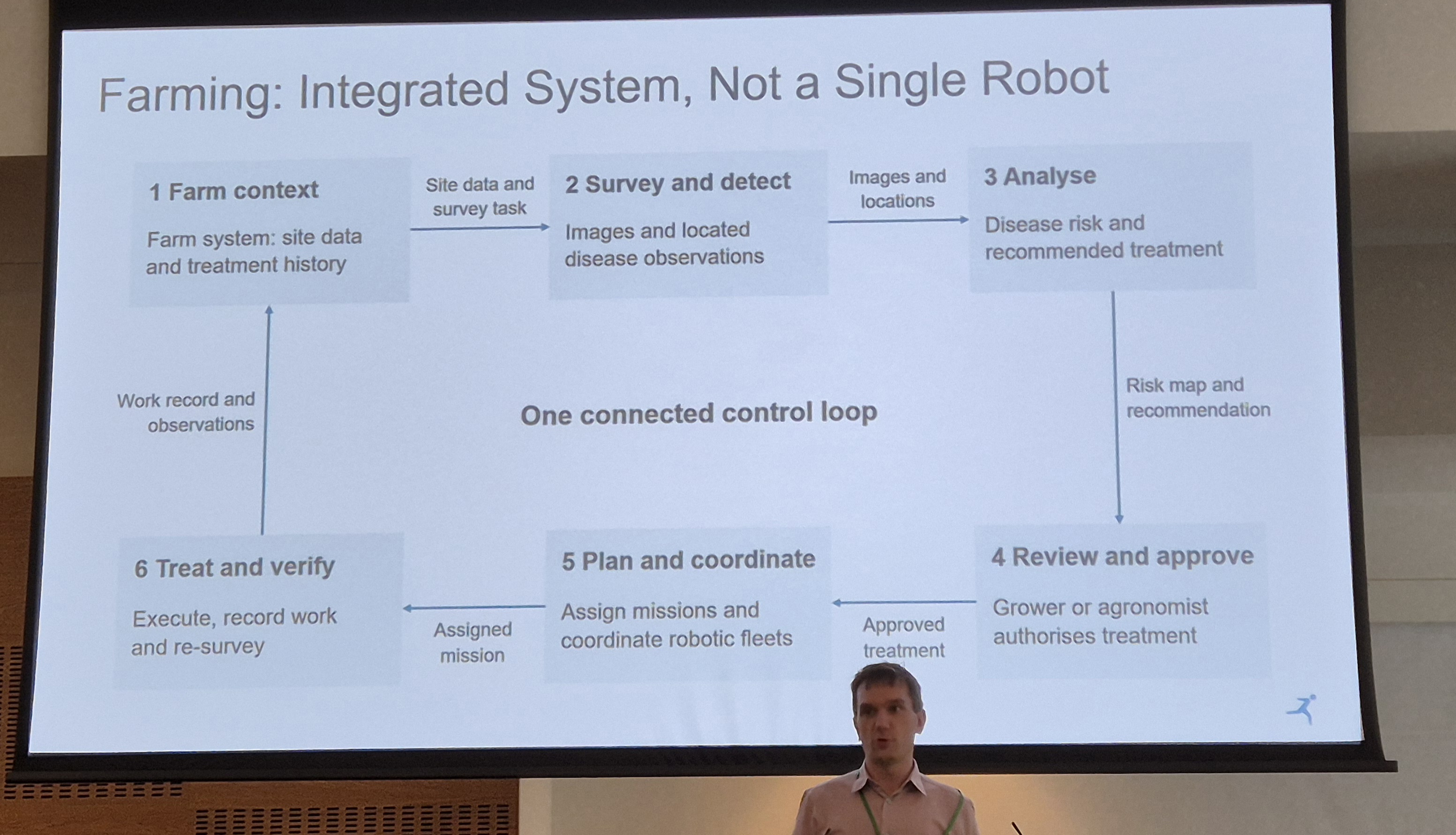
This talk felt especially relevant for the Netherlands, as one of the largest agricultural exporters in the world, where growers increasingly mix robots from different vendors from greenhouses to dairy farms. ROS and Open-RMF could let them work together instead of as isolated islands.
A Deep Dive into Arduino's new Robotics Ecosystem
Next, I left the workshop for a deep-dive by Jim Bruges from Arduino, who talked about how a robot's "brain" can be split into three planes:
- The control plane: an MCU for real-time control, safety, and I/O.
- The application plane: a Linux CPU (optionally with a GPU/NPU) for ROS 2, perception, and navigation.
- The insights plane: AI, from ML-powered perception to LLMs/VLMs/ VLAs.
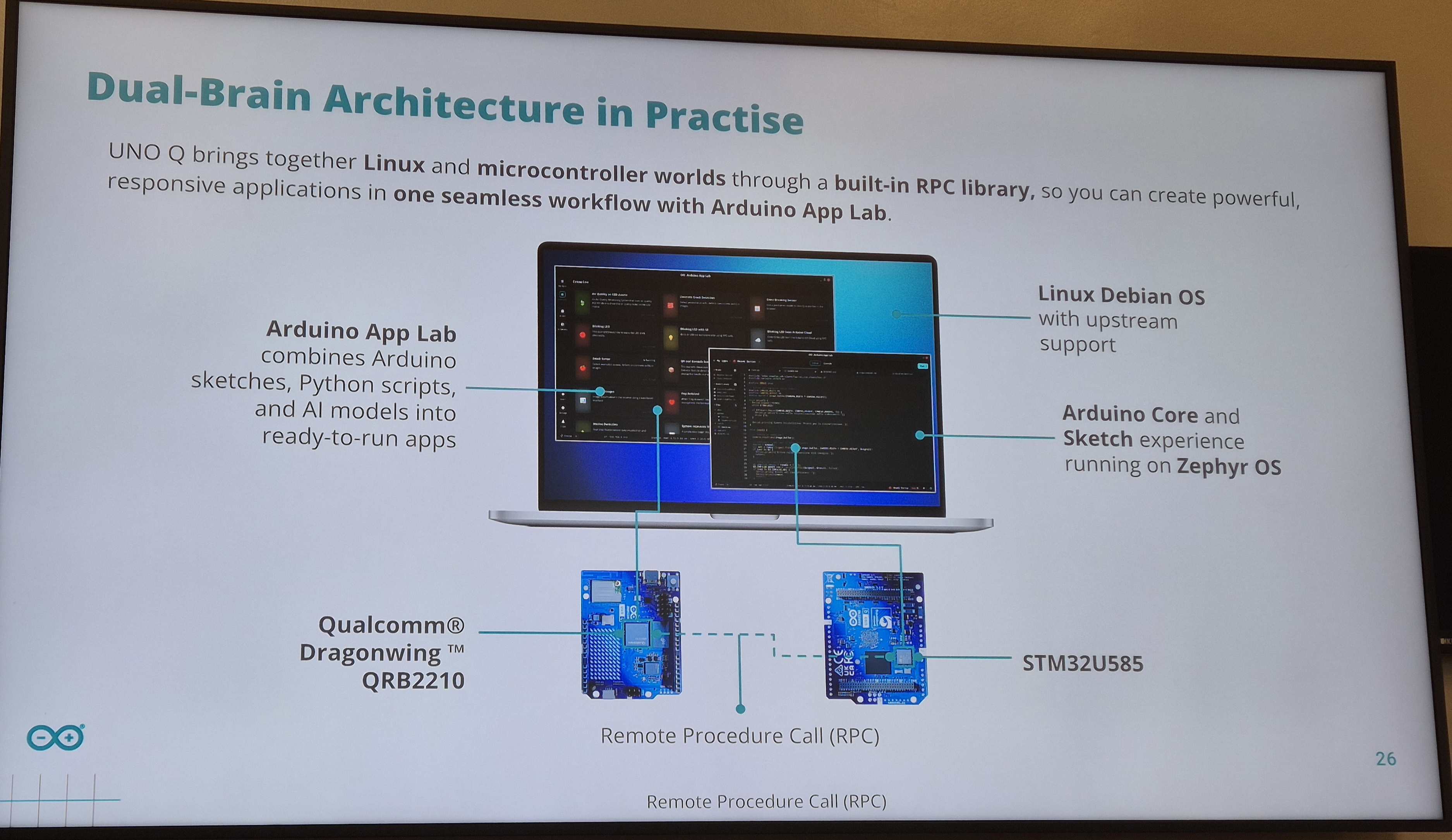
Arduino's UNO Q combines the first two, with its MCU and MPU talking over RPC, as shown on an open-source microduck clone by Luwu Dynamics that Jim built.
https://www.youtube.com/watch?v=wkb3gFDQCrU
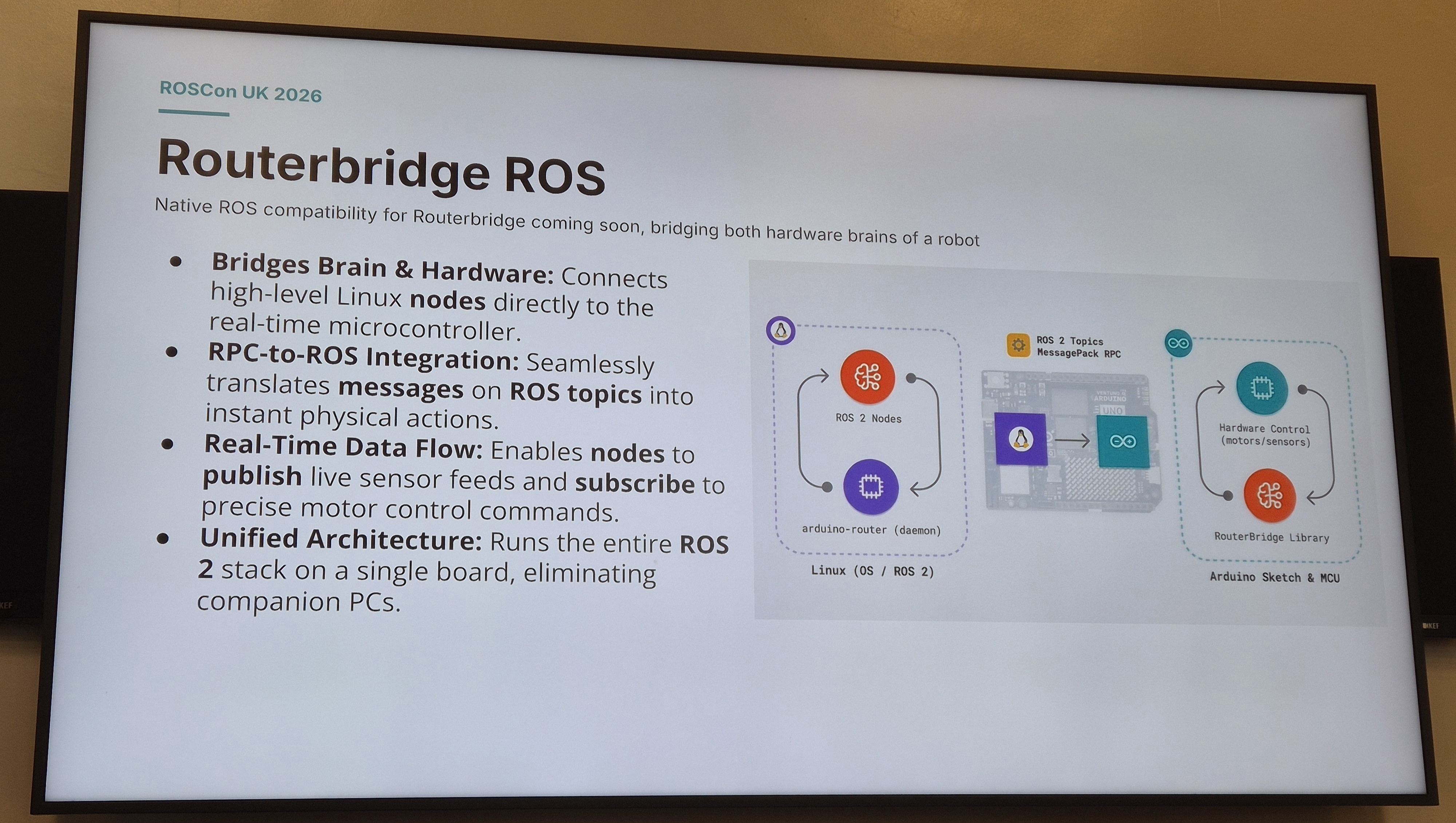
The new Ventuno Q adds GPU/NPU acceleration and CAN FD, which I haven't seen on other ROS 2-compatible hardware yet. Jim also talked about RouterBridge ROS, which builds on Arduino's RouterBridge to translate MCU-MPU messages into ROS. Now that it is out, I can't wait to try it; it could replace micro-ROS for me, which doesn't work with my middleware of choice: Zenoh.
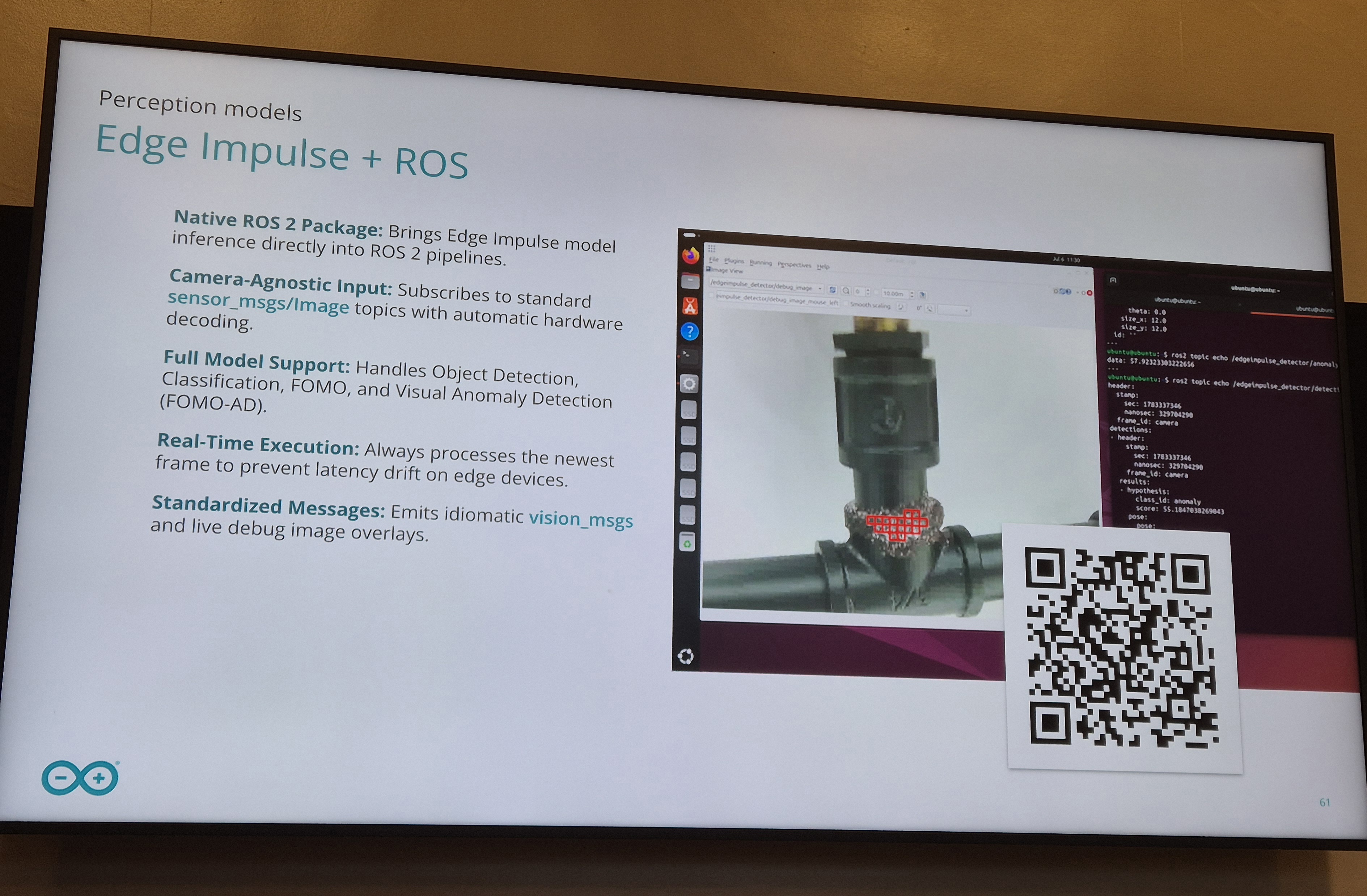
For the insights plane, Jim had us record IMU data on our phones, train a classification model live on Edge Impulse, and deploy it to our phone browsers for testing. It was my favorite session of the day, and well worth leaving the other workshop for.
I chatted with Jim about the Ventuno Q later, and I'm looking forward to Qualcomm's (Arduino's parent company) creator program, and Arduino's once it launches. And if anyone at Qualcomm is reading this: Please send me a Ventuno Q! I'd love to put it through its paces on my robots and share the results right here on this blog!
Gala Dinner
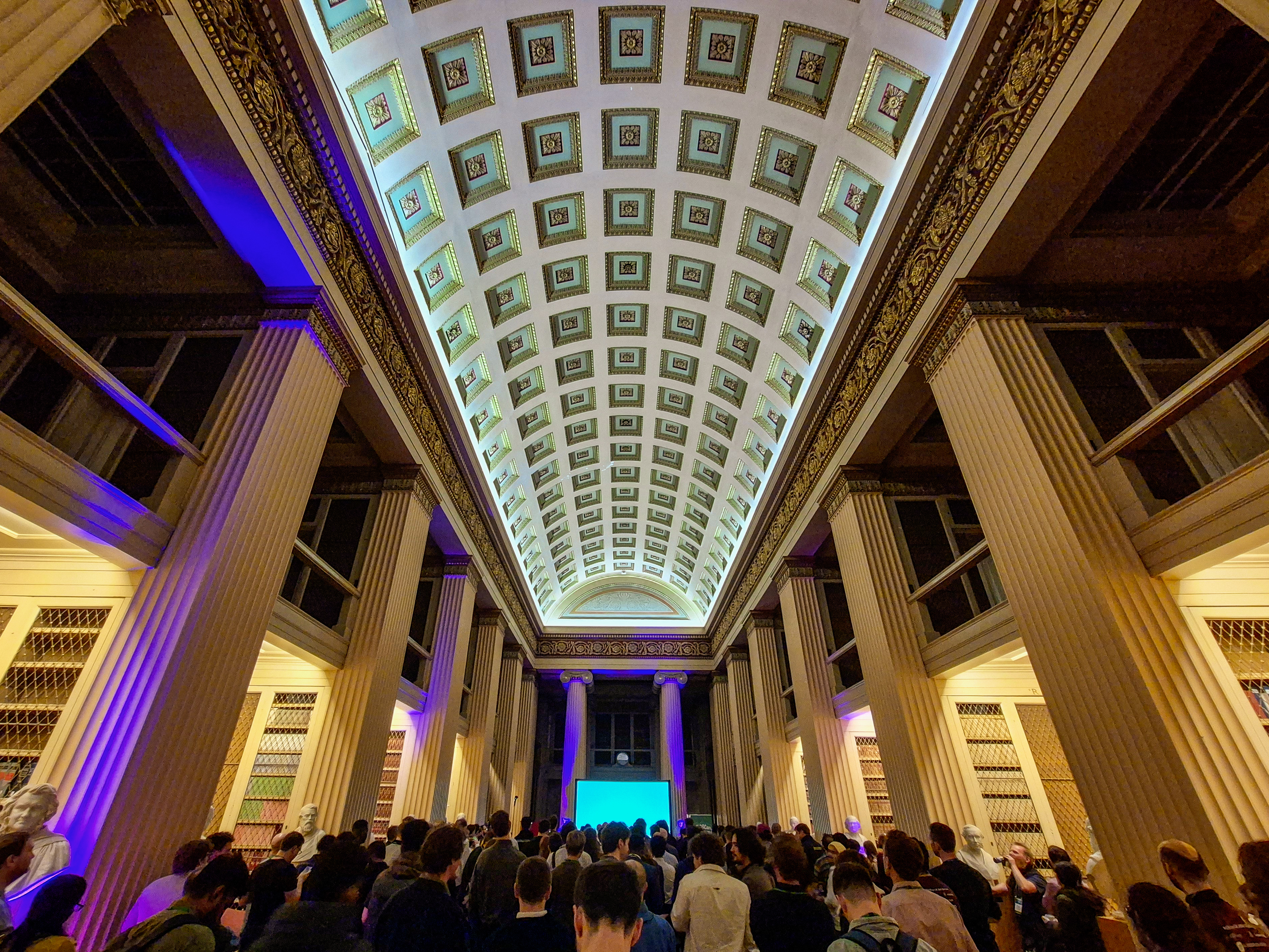
After dropping my backpack at the hotel, I then headed to the Playfair Library Hall for the gala dinner and more networking.
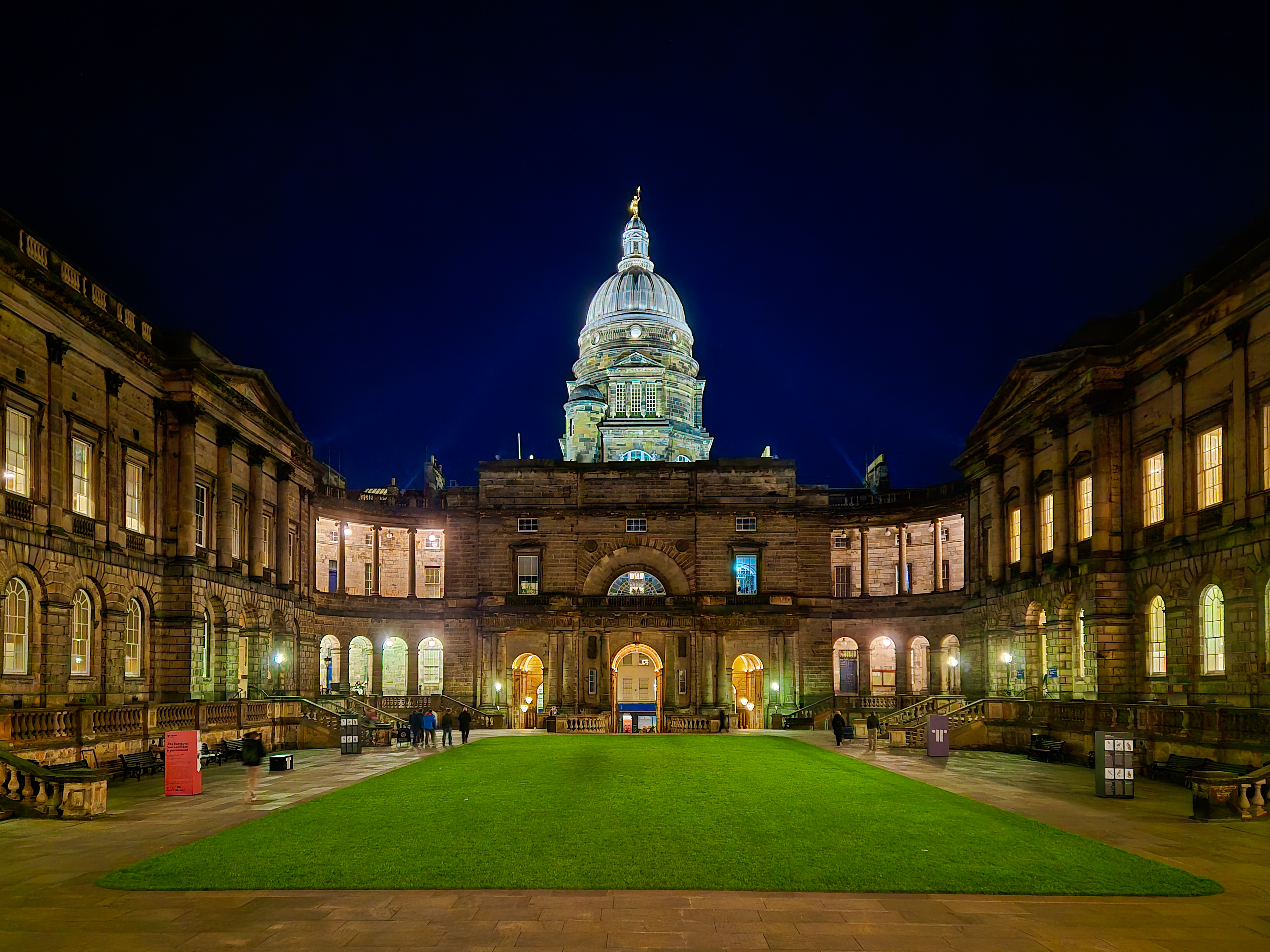
What a location! Under its grand, barrel-vaulted ceiling, it's hard to believe this nearly 200-year-old hall was once a working library. I even wandered around looking at the historic books between conversations, but the real highlight was the people: friends from the community, new faces, people I'd only known from social media, and loads of conversations about robotics, work and hobby projects, and even some potential collaborations.
Day 3 - The Main Talks
Day 3 started differently from the previous two. My talk was done, so I was much more relaxed, but it was also the day Storm Austen and Storm Boelo hit the UK back-to-back, and it didn't stop raining until I flew home the next evening.
Since all the main talks were recorded, I'll try to keep this section short and only highlight the ones that really stood out to me.
Note: The video recordings are not yet up, so I've added placeholder images - I will update this blog with the recordings as soon as they are available.
From Muddy Fields to Fancy Wines: Lessons from Agricultural Robotics at Scale
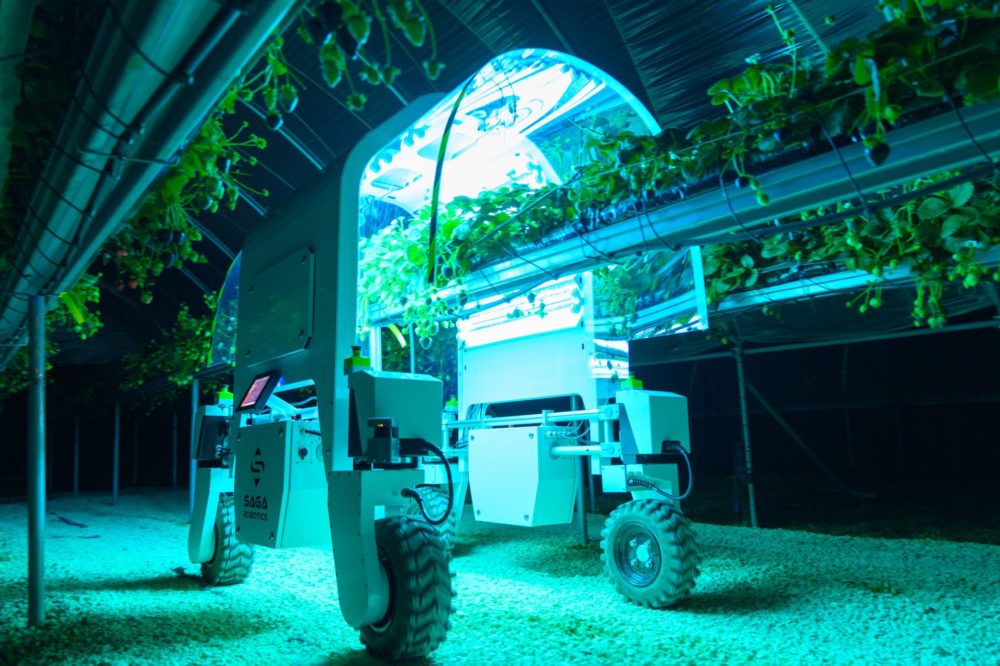
The day kicked off with the keynote by Dr. Lars Grimstad, CTO and co-founder of Saga Robotics, whose Thorvald robots treat mildew with UV-C light instead of pesticides.
Coming from the agri-food workshop the day before, a few things stood out to me:
- What started as a master's and PhD project has since grown into a fleet that covers nearly 1,300 acres of US vineyards in 2025, and about 20% of the UK's strawberry farms. What an incredible achievement!
- They left out manipulators entirely, which not only kept things simple, but also freed the team up to focus on perfecting navigation - once again, a specialized robot doing one thing really well.
- Their impressive modular design allows the same modules to be combined into robots of different shapes and sizes, and also allows for quick fixes on the field.
- The robots work night shifts, since UV-C treatment works best in the dark. Lars's videos looked like a sci-fi movie, with bright blobs moving across a dark field.
A Map for Machines
Aron Kisdi from Autodiscovery, the conference's platinum sponsor, made the case for a global, collaborative map for robots. His point was simple: today, every robot's map is its own isolated island, even though REP-105 has defined an Earth frame for around 16 years. So why not use it to build shareable, geo-referenced maps, so that a robot entering an already mapped space doesn't have to map it all over again? It's a pretty neat idea, and if the ROS community picks it up, it could have a real impact. The recording goes into how this could work in practice:
A Museum Detour: Dolly the Sheep and Freddy the Robot
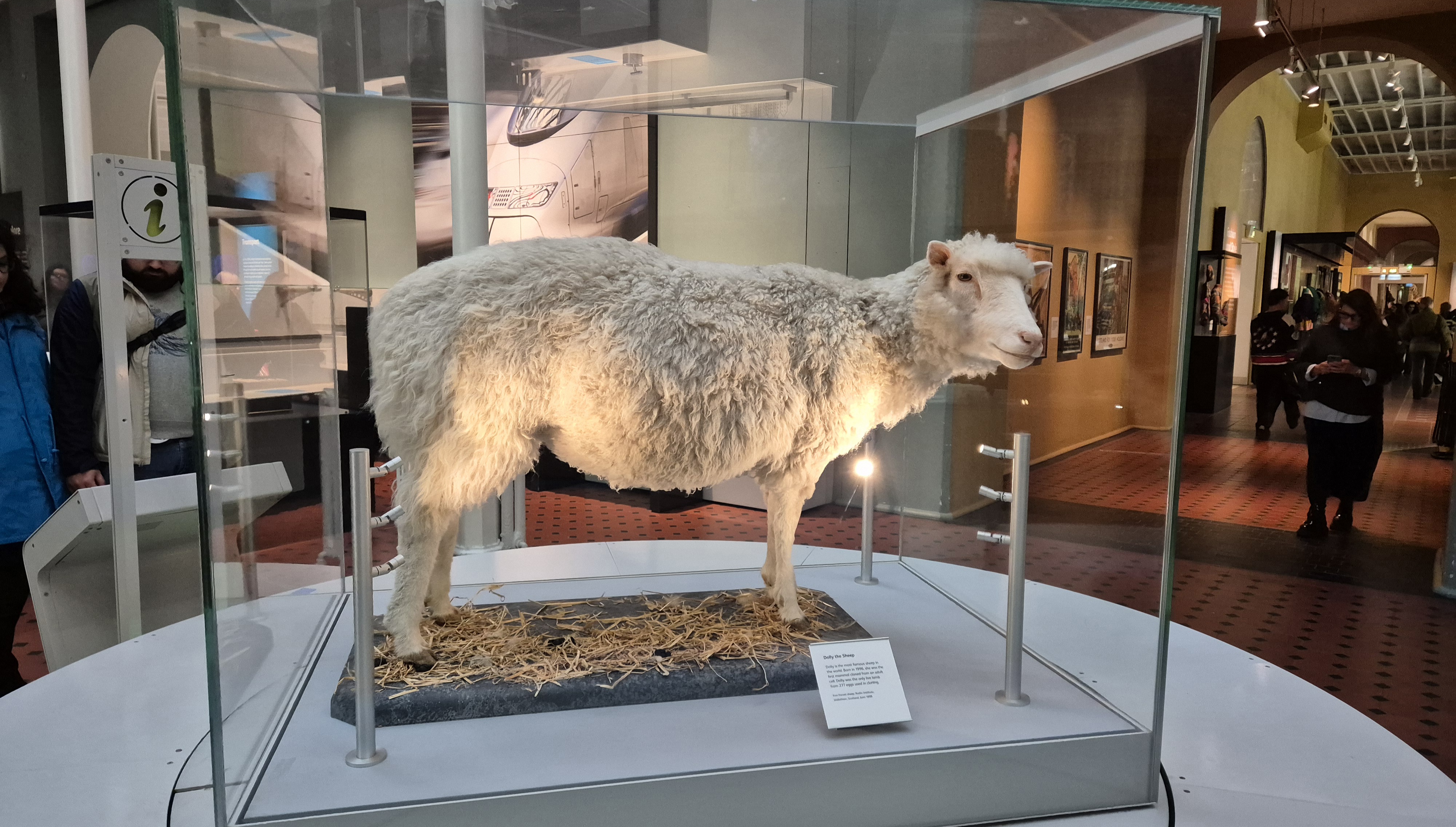
After lunch, with the rain still pouring down, I slipped out for a networking-detox and visited the National Museum of Scotland, as recommended by Naroa Núñez-Calvo, a new friend from the Robotarium tour. I mainly went to see the real (if taxidermied) Dolly the sheep, but what I didn't expect to find was a robot.
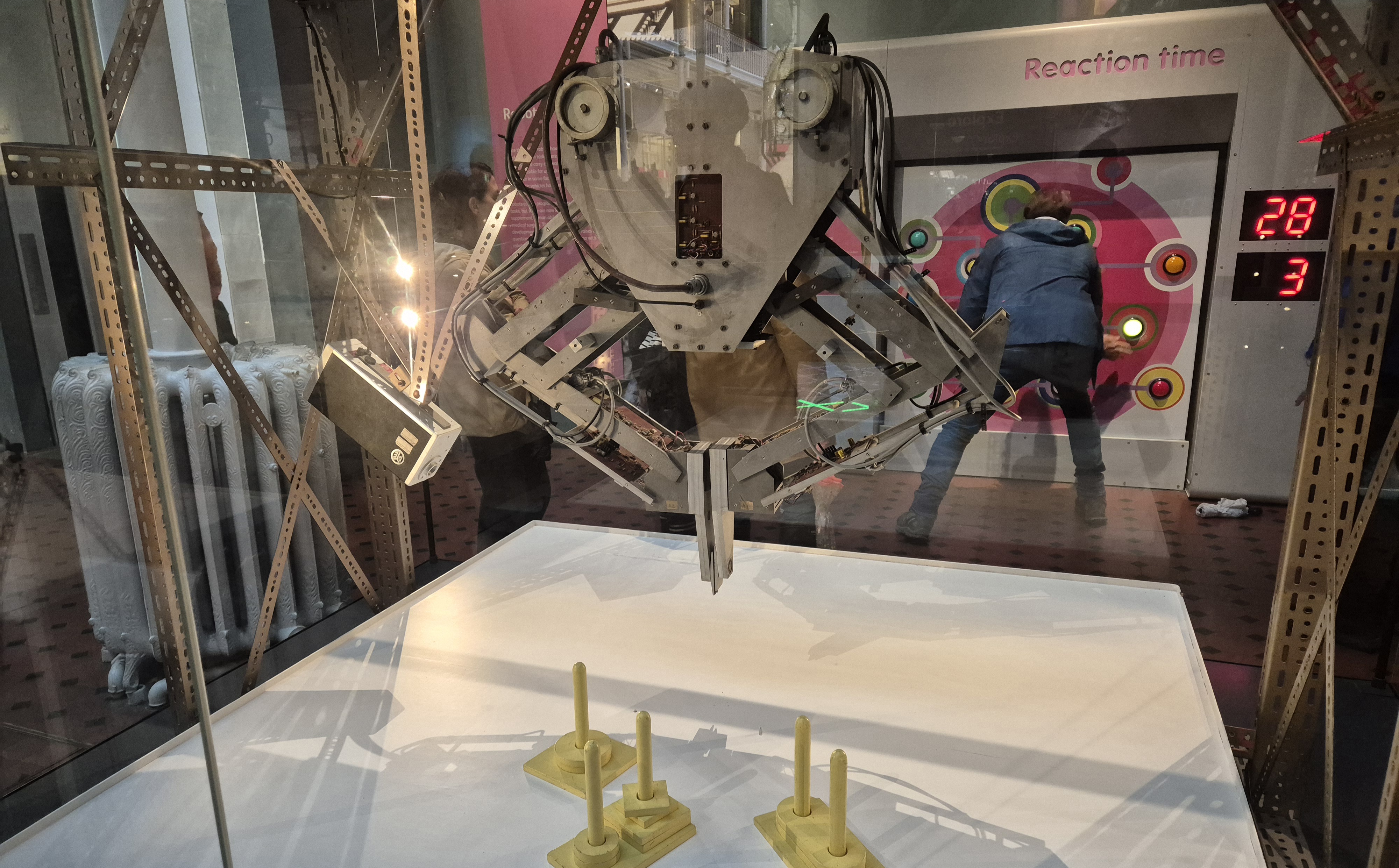
Freddy the robot was built at the University of Edinburgh between 1973 and 1976, and was one of the first robots with both a "hand" (a gripper) and an "eye" (a camera). The idea was for it to learn tasks the way a young child would, which sounds a lot like where physical AI is heading today. They were certainly on the right track back then, and it was really cool to see such a historic robot up close.
ros2_control goes Industrial Automation
Back at the venue, the next talk was right up my alley after my own deep-dive: Dr. Denis Stogl, one of the ros2_control maintainers and owner of the b-robotized group, spoke about using ros2_control in industrial automation. What stood out to me was how much faster their projects run as compared to traditional industrial automation deployments. Thanks to ROS 2's features like simulation, mock hardware, and reusable ros2_control components, industrial use cases that used to take months now take a couple of weeks. After using mock mode for my own demos, I can totally see why.
Lightning Talks
These are always my favorite sessions at any ROSCon: in about 20 minutes, you hear about ten different projects, and even when a topic isn't relevant to my work, I almost always come away with a great idea to dig deeper into, or someone to chat with later. There were two sessions, morning and afternoon, with 2 minutes per speaker.
If there are only two recordings you watch from ROSCon UK, I'd suggest the two lightning talk sessions; you'll see why these are my favourite talks at any ROSCon.
Closing Remarks and Farewell Drinks
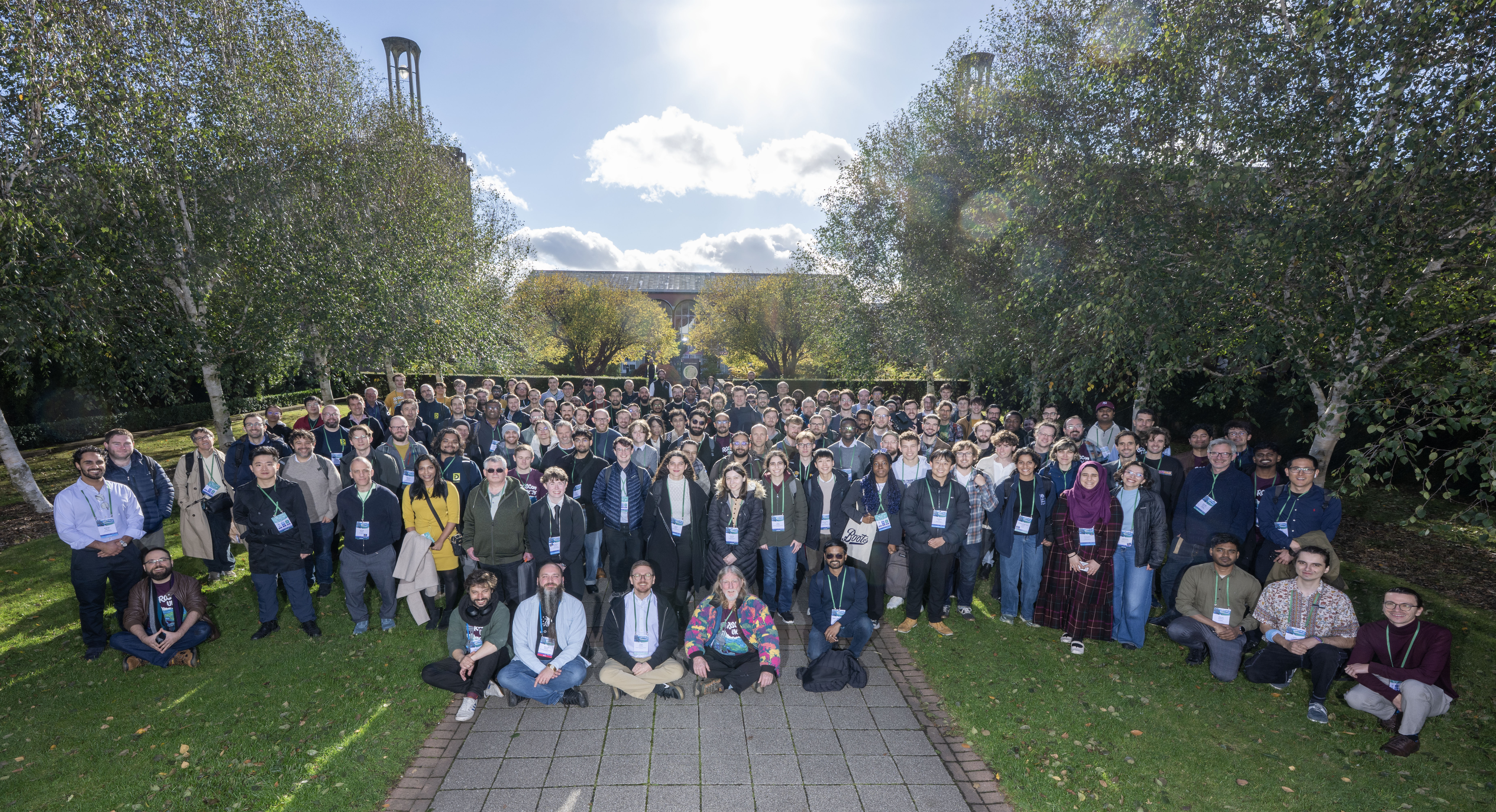
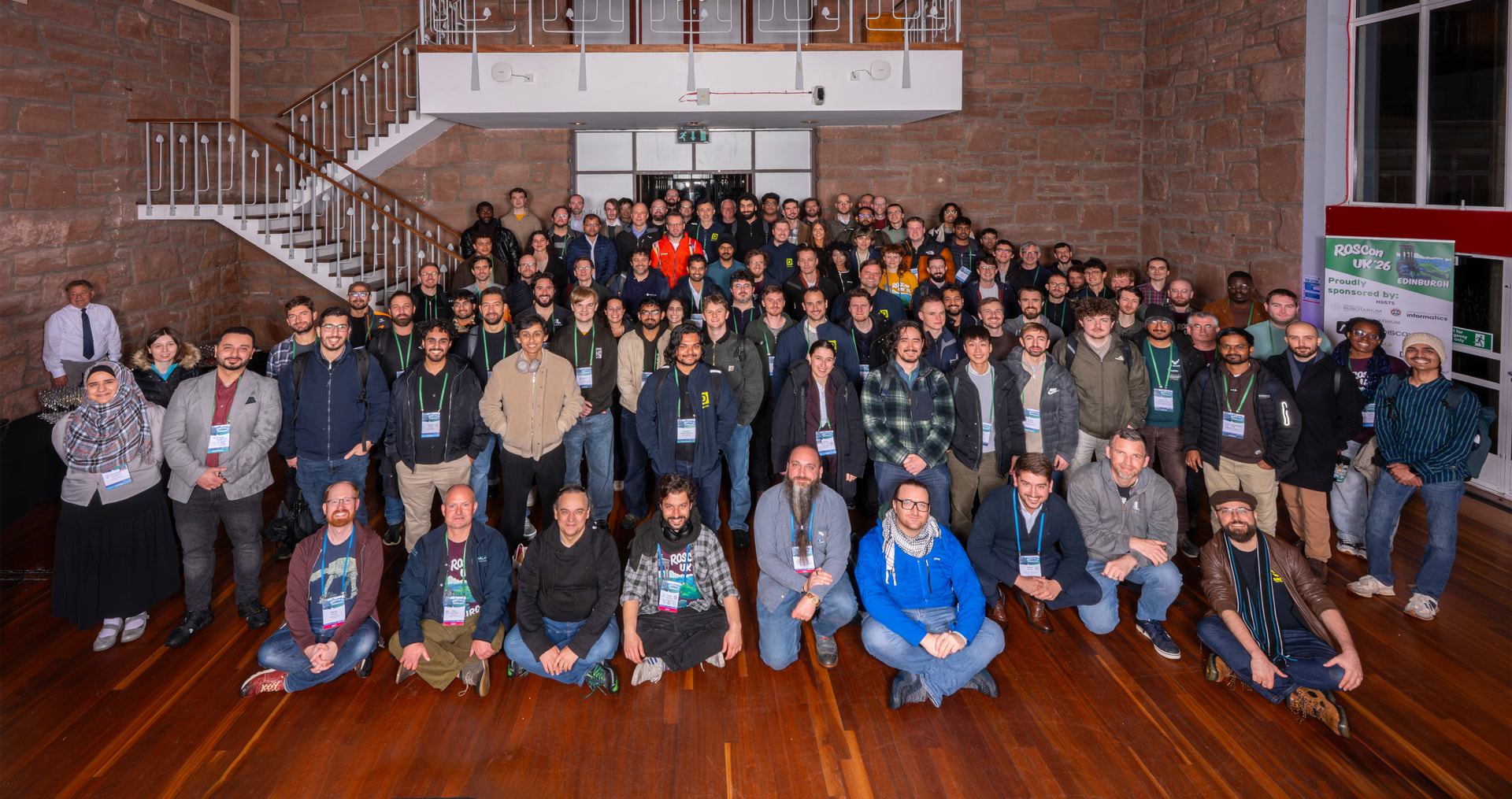
The organizers closed the conference with a few stats about the conference. There were 235 attendees, mostly from the UK, but also from around Europe and beyond - I even met someone from Saudi Arabia. They also announced next year's host city - Bristol - and that it will be in July, which sounded like a relief after all that rain. I've always wanted to visit Bristol, and not just for the robotics: Banksy is one of my favorite artists.
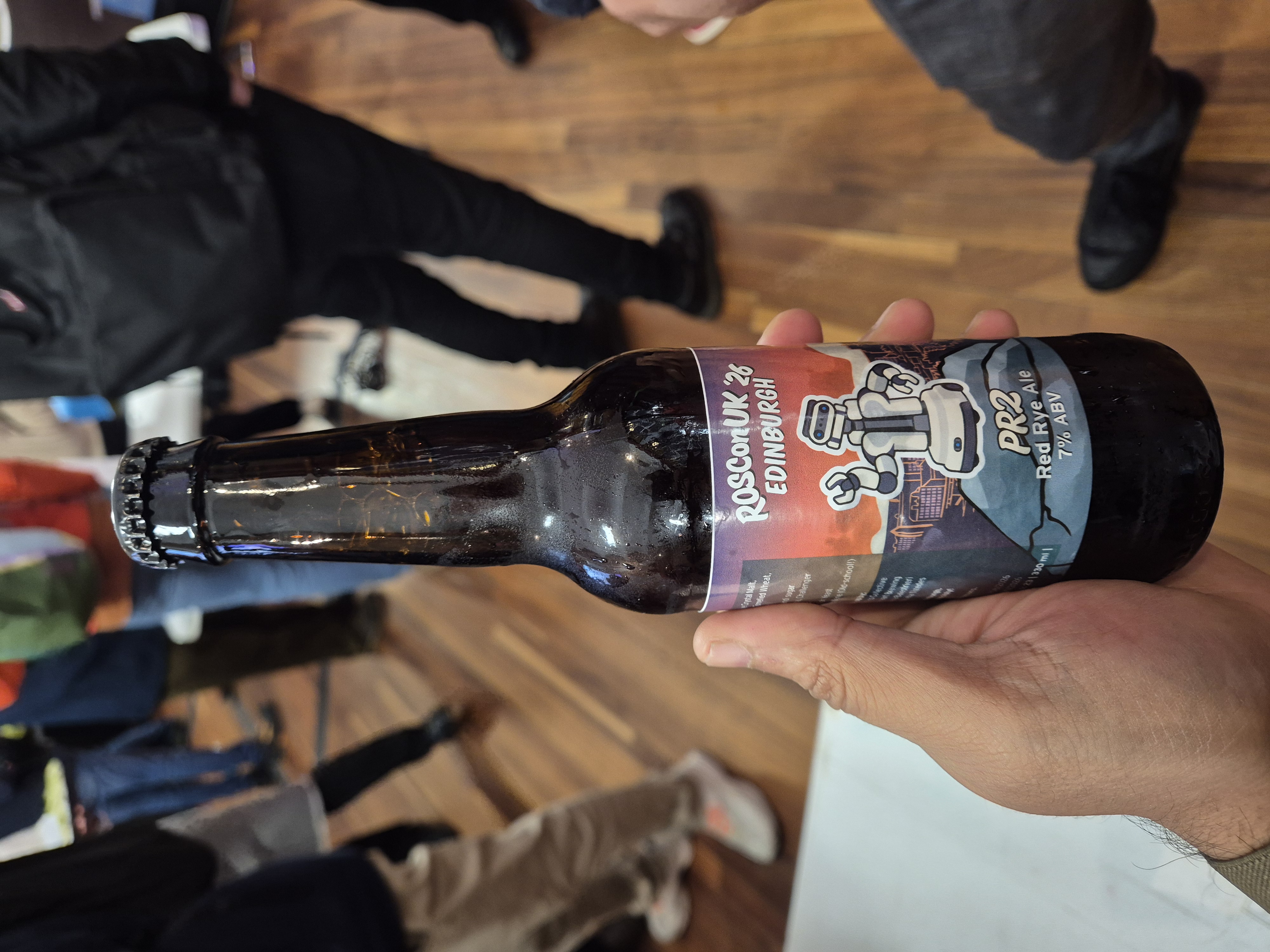
To close off the event, the organizers had a surprise in store for us - they had specially brewed some beers and named them after the TurtleBot3 robots (Burger and Waffle) and the PR2. Since I don't drink anymore, I kept a PR2 bottle as a souvenir until I realized I couldn't fly back with it. If anyone from the Tartan Robotics Collective is reading this: next time, empty souvenir bottles for the non-drinkers would be amazing!
Impressions
Three days, two storms, one deep-dive and loads of great conversations later, I came home with a head full of ideas, and plenty of lessons on how robots are actually deployed in the real world. Agriculture turned out to be one of the most exciting places to see ROS at work, with entire fleets running in real fields and vineyards. Modularity kept coming up as a way to keep commercial robots affordable and easy to maintain, and as these deployments scale up, robots from different vendors need to work together - which is where Open-RMF comes in.
But what I'll remember most are the people. Students, researchers, hobbyists, and companies all came together, and some of my favorite moments weren't in the talks at all, but over coffee and at the gala dinner, making new friends and finally meeting people I'd only known online. For an introvert who usually slips out of networking events early, that says a lot about how welcoming this community is. It certainly helped that this was a smaller, more intimate event than the global ROSCon, which can get quite overwhelming.
I also really liked the deep-dive concept. A 45-minute slot leaves room for real technical discussion, rather than a short talk and a quick Q&A. I'd love to see them at a global ROSCon someday, and judging by my conversations, I'm not the only one. For a first ROSCon talk, a regional deep-dive turned out to be a great place to start, and it's given me the confidence to apply for the next ROSCon UK, and even the global ROSCon in Krakow. And seeing what the Tartan Robotics Collective has built, I'd love to see something similar back home - a ROSCon NL, anyone?
As for my own projects, with both my LeKiwi and SO-101 now running ROS 2, it feels like the right time to finally try Open-RMF. I also want to upgrade sts_hardware_interface to ROS 2 Lyrical, follow up on the collaborations we discussed, and write up my talk for Seeed Studio's blog. I was going to suggest doing something about the weather, but the organizers are already a step ahead with Bristol in July.
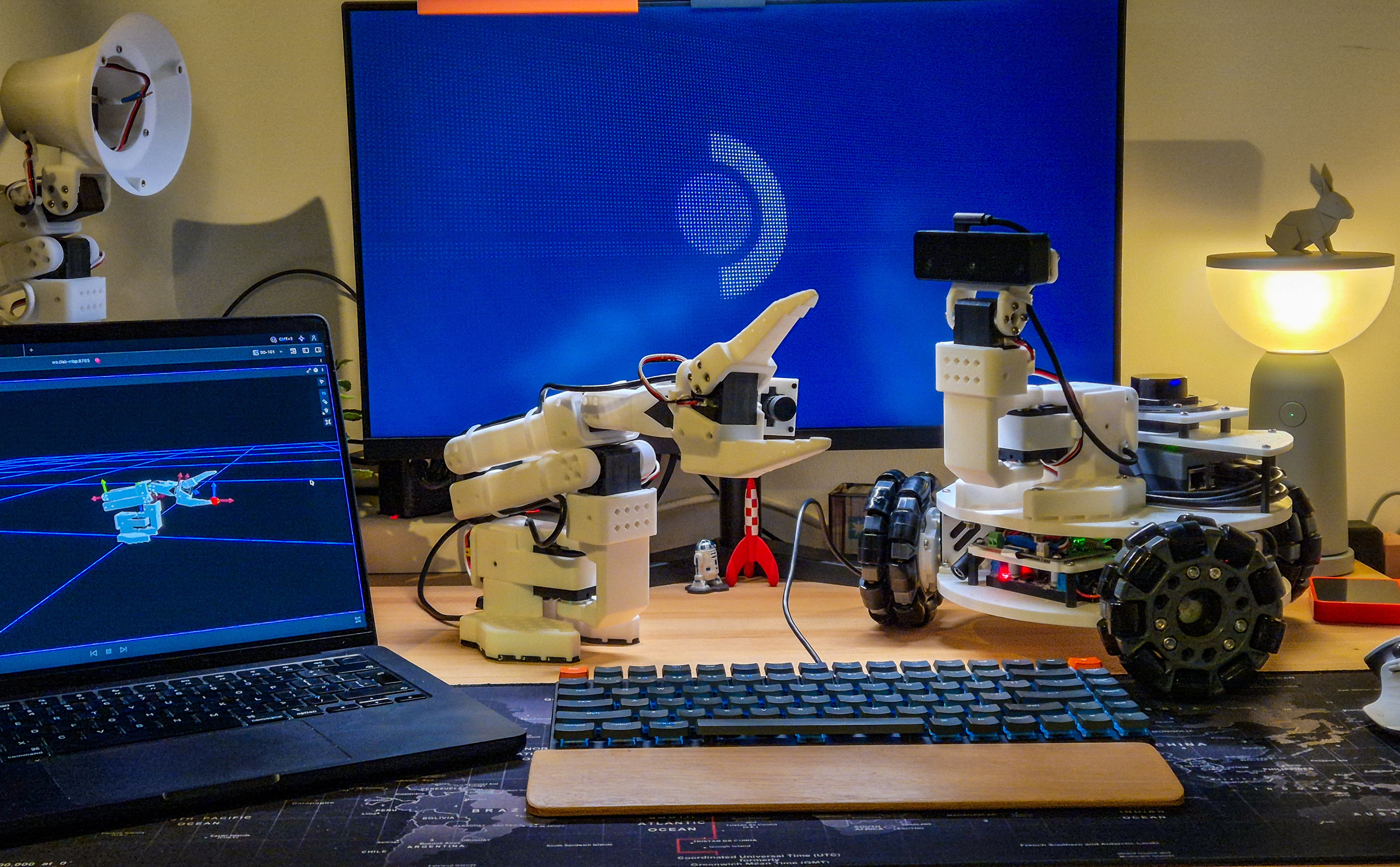
Once again, thank you to the Tartan Robotics Collective for the complimentary media tickets, to the organizers and volunteers for the brilliant organization and hospitality, and to Seeed Studio for their support. If you were there and we chatted (or didn't get the chance to), feel free to reach out - all my socials are here on kamathrobotics.com.
About the author
- Generalist engineer, specializing in robotics, embedded systems, and mechatronics.
Comments
Join the discussionNo comments yet. Be the first to comment.